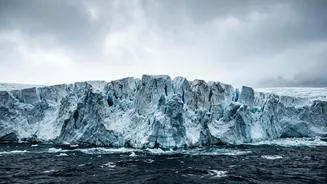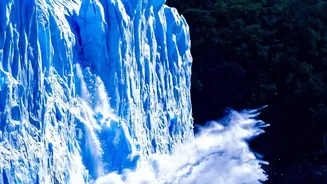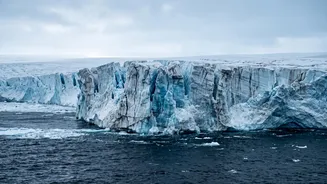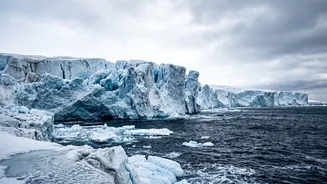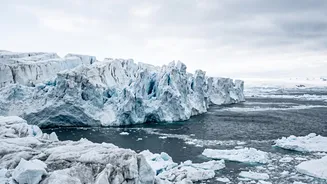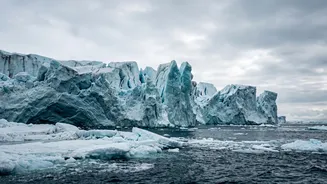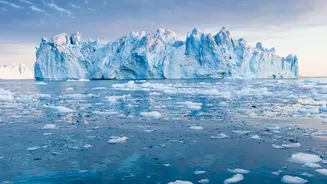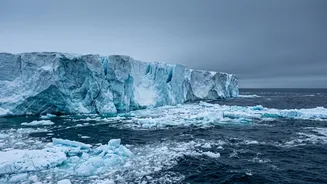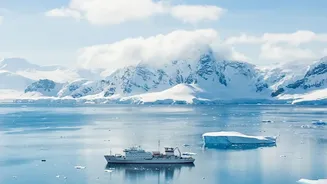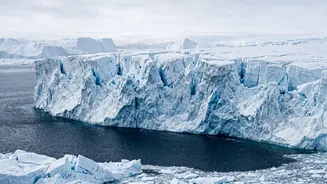




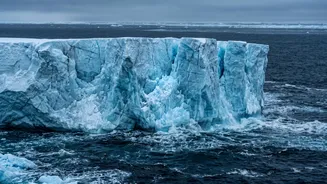
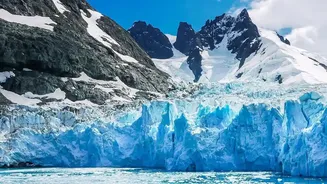
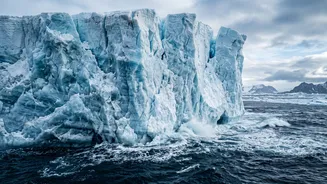
Antarctica's Thwaites Glacier, ominously nicknamed the 'Doomsday Glacier', is one of the most critical wildcards in our planet's future. New research is solidifying the scientific consensus that its collapse is not a question of 'if' but 'how fast'.
The Alarming New Numbers
A
recent study published in Nature Communications has delivered a sobering update on the state of the Thwaites Glacier. Researchers from the University of California, Irvine, and NASA's Jet Propulsion Laboratory developed a new computer model that accounts for a previously underestimated factor: how warm ocean water penetrates deep beneath the ice. The results are stark. The model projects that Thwaites could contribute up to 30 millimetres to global sea levels by 2100, a figure that doubles previous estimates. Worryingly, this accelerated melt could happen even without any additional warming of the climate, suggesting that a certain amount of future ice loss is already locked in. This isn't just a minor adjustment; it fundamentally changes the timeline for coastal communities preparing for rising waters.
Why Is Thwaites the 'Doomsday Glacier'?
Located in West Antarctica, Thwaites is a colossal river of ice, roughly the size of Florida or the island of Great Britain. It currently contributes to around 4% of annual global sea-level rise. But its true significance lies in its role as a natural dam. It acts as a cork, holding back the rest of the massive West Antarctic Ice Sheet. If Thwaites were to collapse entirely on its own, it holds enough ice to raise global sea levels by about 65 centimetres, or over two feet. However, if its collapse were to destabilise the surrounding ice sheet, the total sea-level rise could be as much as 3 to 5 metres (10 to 16 feet), redrawing coastlines across the globe.
Melting From the Bottom Up
The greatest threat to Thwaites comes not from the air, but from the ocean below. The glacier's base rests on bedrock that slopes downward inland. This geography allows relatively warm, dense ocean water to creep in underneath the ice, melting it from the bottom up. Recent research has revealed this process is more aggressive than once thought. Scientists have discovered a 'grounding zone'—a wide area where seawater intrudes miles under the grounded ice, lifted and pushed by tides in a process called 'tidal pumping'. This allows warm water to attack the glacier's foundations, creating cracks and channels that accelerate the melting process.
Losing Its Grip
A key feature holding Thwaites in place is an underwater mountain known as the Mouginot Ridge, which acts as a stabilizing pin. The relentless melting at the grounding zone is weakening the glacier's grip on this ridge. The new models predict there is a 60% chance that the glacier could become permanently unpinned from this ridge by the end of the century. Losing this anchor point would be a critical tipping point, likely triggering a much more rapid and irreversible retreat of the glacier into the deeper basin behind it. Some projections suggest this unpinning could happen as early as the late 2030s.
What This Means for India
The fate of a glacier thousands of kilometres away has direct and severe implications for India. With a coastline spanning over 7,500 kilometres, dotted with low-lying megacities like Mumbai, Kolkata, Chennai, and Kochi, the nation is exceptionally vulnerable to sea-level rise. The projections from the Thwaites studies are not abstract numbers; they represent a tangible threat to homes, infrastructure, and freshwater resources. A rise of even 65 centimetres—the amount from Thwaites alone—would magnify the destructive power of storm surges, lead to chronic coastal flooding, and displace millions of people. Scientists have explicitly noted that a Thwaites collapse would severely affect coastal communities from Bangladesh to the Pacific Islands, putting India squarely in the path of the consequences.