







Welcome to Knuffingen Airport
Nestled within Hamburg's famed Miniatur Wunderland, the world's largest model railway exhibition, lies an attraction that must be seen to be believed: Knuffingen Airport. This is no static display. It's a fully automated, bustling aviation hub where approximately
45 different aircraft, from Cessnas to jumbo jets, perform around 250 scheduled take-offs and landings each day. Push-back vehicles guide planes from their gates, which then taxi to the runway, accelerate with roaring engine sounds, and appear to lift off into a bank of clouds. The airport is a meticulous replica of modern air travel, complete with thousands of miniature figures, ground service vehicles, and even a dedicated fire brigade ready for emergencies.
A Feat of Miniature Engineering
The magic behind Knuffingen's take-offs isn't magic at all, but a remarkable piece of engineering. To simulate flight, the creators developed a unique catapult system. As a plane reaches its take-off position, two guide rods emerge from the runway to attach to it. These rods are mounted on a carriage that pulls the aircraft forward, carefully lifting the nose first to mimic a real ascent before the plane disappears through a fabric cloud wall. The entire system, which took nearly six years and cost millions of euros to develop, runs on custom software with over 50,000 lines of code. This coordinates everything from the flight schedule to the movement of over 100 autonomous vehicles on the ground, creating a seamless and shockingly realistic operation.
More Than Just an Airport
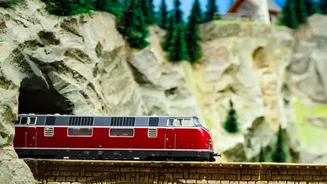
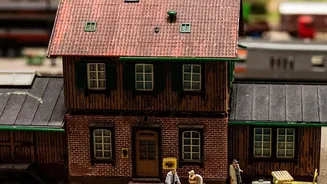
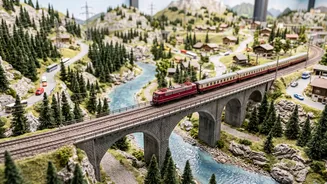
While the airport is a stunning highlight, it's just one part of the vast and intricate Miniatur Wunderland. Spanning over 1,600 square metres of model space, the exhibition is a journey across the globe in miniature. Visitors can explore detailed sections depicting Hamburg itself, the Austrian Alps, Italy, Scandinavia, and the Americas, among others. The world is tied together by the largest model railway system on the planet, with over 1,200 trains navigating more than 16 kilometres of track. The entire Wunderland operates on a 15-minute day/night cycle, where hundreds of thousands of LEDs illuminate the tiny cities and landscapes, creating an entirely new visual experience after dusk.
The Dream of Two Brothers
The vision for this massive undertaking came from twin brothers, Frederik and Gerrit Braun. In 2000, while on holiday, Frederik was inspired by a model train shop and called his brother with a wild idea: to build the world's largest model railway. Though Gerrit was initially skeptical, the idea took hold. The brothers, who had previously run a nightclub, poured their energy into this new, more wholesome venture, opening the first three sections of Miniatur Wunderland in 2001. Their passion was not just for building models, but for creating a living world full of detail, humour, and engineering marvels that could be appreciated by visitors of all ages.
A World in Constant Motion
What truly sets Miniatur Wunderland apart is its dynamic nature. It is not a static museum but a world that is constantly evolving. New sections are always under construction, with plans for areas like Central America and the Caribbean on the horizon. Hidden throughout the existing landscapes are hundreds of humorous and surprising scenes for eagle-eyed visitors to discover—from superheroes in unexpected places to tiny dramas playing out in apartment windows. The founders' dedication to innovation and detail ensures that even repeat visitors can find something new. This blend of technical wizardry and playful creativity has made Miniatur Wunderland one of Germany's most popular tourist attractions.