






What Exactly Is a Backup Capital?
A backup capital is a city designated to assume the functions of a nation's primary capital in the event of a crisis. This isn't necessarily about permanently moving the government, but about ensuring continuity. The trigger could be a natural disaster,
an act of war, or severe internal strife that paralyses the main administrative hub. For example, Japan is exploring a backup capital due to Tokyo's significant earthquake risk. The plan is to have a location ready to take over key political and economic functions if Tokyo is incapacitated, ensuring the state can continue to operate. This differs from countries that have multiple capitals for historical or political reasons, like South Africa, which divides its governmental branches among three cities: Pretoria (executive), Cape Town (legislative), and Bloemfontein (judicial). A backup capital is, first and foremost, a strategic contingency plan.
A Tool for Economic Decentralisation
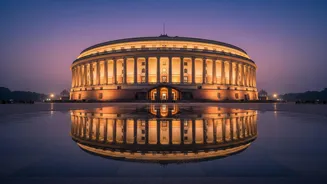
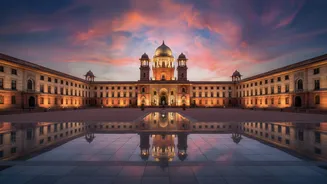
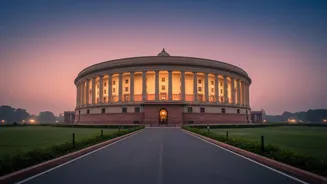
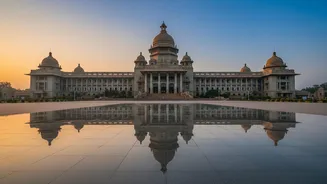
One of the most compelling arguments for a second capital is its potential to decentralise economic power. In many nations, the capital city becomes a magnet for talent, investment, and infrastructure, often leaving other regions behind. This concentration creates immense pressure on the primary city's resources while widening regional economic disparities. Establishing a second administrative centre can spread development more evenly. It encourages investment in new infrastructure, creates high-quality jobs outside the traditional hub, and can stimulate a new economic ecosystem. In India, the debate has surfaced periodically, with proponents arguing that a southern capital could better integrate the region into the national development scheme and give voice to its aspirations. The idea isn't just to build a new set of government offices, but to use the move as a catalyst for balanced national growth.
Enhancing National Security and Resilience
Beyond economics, the core function of a backup capital is to enhance national security. Concentrating all critical government infrastructure—parliament, ministries, military headquarters, and supreme courts—in one location creates a single point of failure. B.R. Ambedkar, a key architect of the Indian Constitution, argued for a second capital precisely on these grounds, noting that Delhi was vulnerable and distant for many. He suggested Hyderabad as an option due to its central location and accessibility. A geographically separate backup capital ensures that the government can continue to function even if the primary capital is compromised. This concept of continuity is critical in modern disaster management and defense strategy. It's a national insurance policy against a worst-case scenario, ensuring that governance doesn't collapse along with buildings in a crisis.
The Practical and Symbolic Hurdles
Despite the strategic advantages, implementing a backup capital is immensely complex and costly. The financial investment required to duplicate administrative infrastructure, secure communication networks, and housing is enormous. There are also significant logistical challenges in splitting government functions. Which ministries move? How do different branches of government coordinate across hundreds or thousands of kilometres? These are not trivial questions. Beyond the practicalities lies a symbolic hurdle. A single capital city often serves as a powerful symbol of national unity and identity. Creating a second centre of power could, some argue, lead to multiple power centres and regional rivalries, undermining national cohesion. The choice of city itself can become a point of political contention, as seen in Indian debates where cities like Bengaluru, Hyderabad, and Nagpur have been proposed.