

Meet NASA's Next Great Observatory
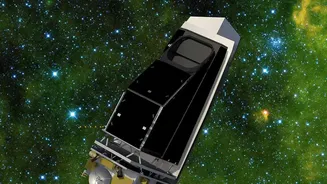
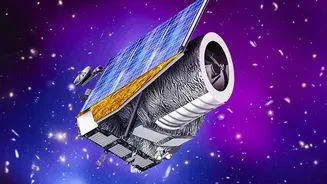
PRIMA, short for the Probe far-Infrared Mission for Astrophysics, is a next-generation space telescope selected by NASA to explore the evolution of the universe. It is the first in a new category of missions known as Probe Explorers, designed to be more
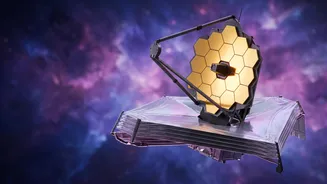
ambitious than smaller projects but more focused than massive flagships like the James Webb Space Telescope (JWST). Managed by NASA's Jet Propulsion Laboratory, PRIMA is an international collaboration involving contributions from Canada, Germany, France, and others. If fully approved, the telescope is slated to launch no earlier than 2033 for a planned five-year mission to survey the cosmos. Its primary goal is to study the universe in far-infrared light, a part of the spectrum that holds the secrets to how planets, stars, and galaxies come into being.
Peering Through the Cosmic Dust
Much of the action in the universe happens behind thick clouds of cosmic dust and gas. These stellar nurseries, where stars and planets are born, are opaque to visible light and even some other wavelengths, hiding these crucial processes from view. Far-infrared light, however, can penetrate this dust, allowing astronomers to see what's happening inside. PRIMA is specifically designed to fill a major observational gap between shorter-wavelength infrared telescopes like JWST and longer-wavelength radio telescopes like ALMA. By detecting this specific light, the mission will be able to observe the faint heat glow of the coldest objects in the universe, providing unprecedented views of cosmic formation. According to NASA, this will help us understand everything from the formation of galaxies to how water may have arrived on Earth.
The Scientific Quest
PRIMA has three main scientific objectives. First, it will investigate the birth of stars and the formation of new planetary systems. Scientists hope to quantify the role water plays in planet formation by tracking its signature in the far-infrared. Second, the telescope will trace how galaxies and their central supermassive black holes have grown and evolved together over cosmic history. Dust can obscure growing black holes, but they glow brightly in the infrared, making PRIMA an ideal tool for finding them. Finally, PRIMA will map the buildup of dust and heavy elements across the universe, painting a clearer picture of the cosmic ecosystem. It will even be able to observe distant objects within our own solar system.
A Technological Leap Forward
To achieve these goals, PRIMA will feature a 1.8-meter (5.9-foot) telescope and a suite of highly advanced instruments. A key challenge for far-infrared astronomy is that the telescope itself emits heat, which can overwhelm the faint signals from distant objects. To combat this, PRIMA's telescope and detectors will be cryogenically cooled to just a few degrees above absolute zero. This, combined with new, ultra-sensitive detector technology developed over decades, will make PRIMA orders of magnitude more sensitive than previous far-infrared missions like the Herschel Space Observatory. This technological leap is what will enable it to produce images with groundbreaking sharpness and clarity.
The Confirmation Review Hurdle
Despite the excitement, PRIMA's journey to space is not yet guaranteed. NASA has selected the mission to move into Phase B, which involves advancing the preliminary design and technology. However, it still must pass a formal confirmation review before it can enter Phase C, which is the final design and fabrication stage. This review is a standard and essential part of NASA's process for managing large projects. It serves as a critical checkpoint to ensure the mission's technical plans are sound, its budget is realistic, and its schedule is feasible. The process prevents ambitious scientific concepts from becoming over-promises that cannot be delivered. If confirmed, PRIMA's project cost is capped at approximately $1.2 billion, not including launch costs.