




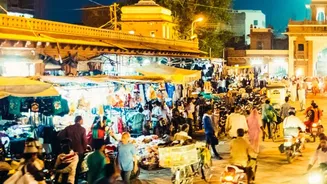
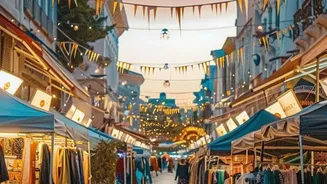

Imagine strolling down a street where the only sounds are chatter and footsteps, not car horns. Cities worldwide are reclaiming streets for people, but not all approaches are the same. Understanding the difference is key to appreciating these spaces.
Car-Free vs. Pedestrian-Priority: What’s the Deal?
At first glance, these terms might seem interchangeable, but they represent two distinct philosophies in urban design. A 'car-free' zone is exactly what it sounds like: motor vehicles are generally banned entirely, with exceptions often limited to emergency services or specific delivery hours. The goal is to create a pure pedestrian sanctuary. Think of ancient city centres with lanes too narrow for cars, like Fes el-Bali in Morocco, the world's largest car-free urban area. 'Pedestrian-priority' streets, on the other hand, operate on a principle of shared space. Cars may be allowed, but they are guests in a realm designed for people. These areas use design cues—like the absence of kerbs, special paving, and narrowed lanes—to naturally slow down traffic and signal that walkers and cyclists have the right of way. This approach, often called a 'Woonerf' in the Netherlands where it was pioneered, seeks a balance where limited local access is possible without sacrificing the pedestrian experience.
The Payoff: Why Bother?
Reclaiming streets from cars isn't just a quaint idea; it has profound benefits. Economically, businesses in pedestrianised areas often report a surge in foot traffic and sales. Socially, these spaces become vibrant hubs for community interaction, fostering a stronger sense of belonging. When people walk, they are more likely to greet neighbours and engage with their surroundings. Environmentally, the reduction in vehicle traffic leads to cleaner air and less noise pollution. Perhaps most importantly, it enhances public health. Walkable communities encourage physical activity, reduce stress, and have been linked to lower rates of chronic disease and improved mental well-being. In 2019, Oslo, after implementing its car-free program, recorded zero pedestrian or cyclist deaths.
Copenhagen's Strøget: The Car-Free Pioneer
One of the earliest and most famous examples of a successful car-free zone is Strøget in Copenhagen. Established as a temporary experiment in 1962, it was met with fierce opposition from shopkeepers who feared bankruptcy. But the opposite happened. The street thrived, and what began as a trial became a permanent, 1.1-kilometre-long pedestrian haven that is now the spine of the city's social and commercial life. Strøget isn't just one street but a collection of them, linking City Hall Square to the elegant Kongens Nytorv. Its success proved that cities could thrive by prioritising people over vehicles, inspiring countless similar projects worldwide.
Barcelona's La Rambla: Where Pedestrians Rule the Centre
La Rambla in Barcelona is the quintessential example of a 'pedestrian_priority' boulevard. It masterfully inverts the typical street design. A wide, tree_lined promenade forms the central artery, bustling with walkers, kiosks, and artists. Vehicles are relegated to narrow, single_lane service roads on the sides. This design ensures pedestrians always have precedence. Stretching 1.2 kilometres from Plaça de Catalunya to the sea, La Rambla is not just a thoroughfare but a destination in itself, home to landmarks like the Boqueria Market and the Liceu Opera. An ongoing transformation aims to give even more space back to pedestrians, reinforcing the street's identity as a place for people first.
Quebec City's Rue du Petit_Champlain: A Historic Oasis
Often cited as one of North America's most beautiful streets, Rue du Petit_Champlain in Quebec City is a journey back in time. This narrow, cobblestoned pedestrian street is nestled at the foot of Cap Diamant, lined with centuries_old stone buildings housing artisan boutiques and quaint cafes. Believed to be the continent's oldest commercial district, its intimate, human_scale design makes it a natural car_free zone. The street’s charm lies in its details: the colourful flower boxes in summer, the festive lights in winter, and the famous 'Breakneck Stairs' connecting it to the upper town. It’s a living museum designed to be explored at a walking pace, proving that preserving history and creating a vibrant pedestrian experience can go hand_in_hand.
York's Shambles: A Medieval Maze
The Shambles in York, England, is so narrow that in some places, you can almost touch both sides at once. It's one of Europe's best_preserved medieval streets, with timber_framed buildings from the 14th century leaning over the cobblestones. Originally a street of butchers, the overhanging jetties were designed to keep the meat below shaded from the sun. Today, the butchers are gone, replaced by quirky shops and eateries. The street is fully pedestrianised, a necessity given its tight dimensions. Its unique, almost magical atmosphere is said to have inspired the fictional Diagon Alley, attracting visitors who come to wander through a tangible piece of history.