




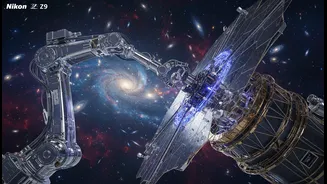


Meet the Habitable Worlds Observatory
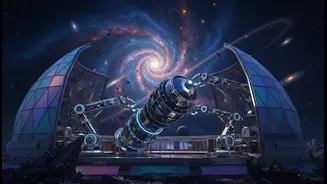
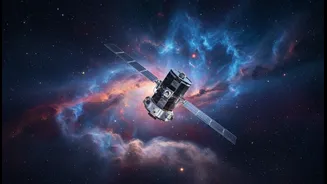
The next flagship mission for NASA, slated to launch in the 2040s, is the Habitable Worlds Observatory (HWO). Following in the footsteps of giants like the Hubble and James Webb space telescopes, HWO has an ambitious primary goal: to directly image and study
at least 25 Earth-like planets orbiting stars similar to our sun. The mission will scan the atmospheres of these distant worlds for biosignatures — chemical hints of life, such as oxygen, methane, and water vapor. To do this, the observatory will need unprecedented stability and precision, using advanced technology to block the overwhelming glare from a planet's host star. But the most significant innovation isn't just in its optics, but in its fundamental design philosophy. HWO is being conceived from the ground up to be serviceable, ensuring it can have a long and evolving life in space.
A New Era of Servicing
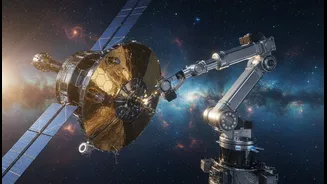
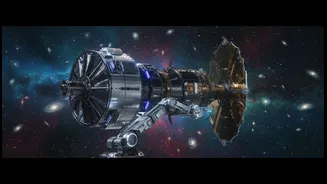
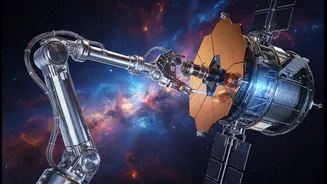
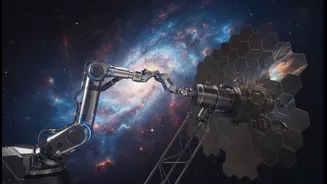
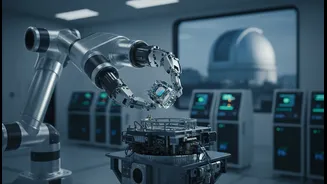
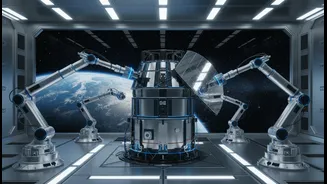
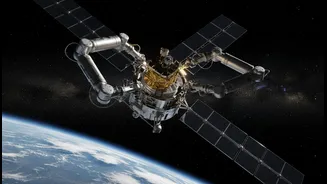
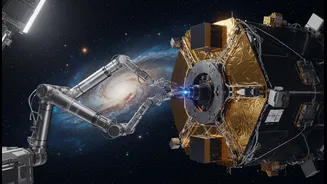
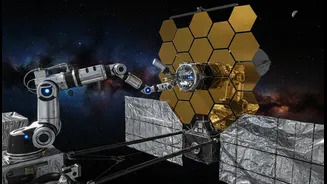
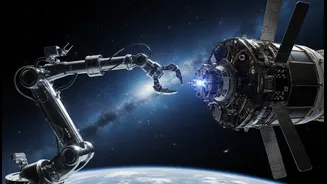
Unlike its predecessors, HWO will be built for robotic servicing, assembly, and maintenance (ISAM). This is a crucial departure from past approaches. The Hubble Space Telescope was famously serviced by astronauts during multiple Space Shuttle missions, but it operates in low-Earth orbit, just a few hundred kilometers away. HWO will be positioned nearly 1.5 million kilometers from Earth at a location called the second Lagrange point, or L2. This spot is ideal for astronomy because it offers thermal stability and a clear view of the cosmos, but it is far beyond the practical reach of human astronauts with current technology. The James Webb Space Telescope (JWST) also operates at L2 but was designed as a single-use mission; once it launched, it could not be repaired, refueled, or upgraded. HWO changes that paradigm entirely. NASA envisions robotic spacecraft autonomously docking with the observatory to perform complex tasks like swapping out old scientific instruments for new ones, repairing damaged components, or even completing parts of its assembly in orbit.
Learning from the Giants
The decision to build a serviceable observatory is a direct result of lessons learned from both Hubble and Webb. The five servicing missions to Hubble were instrumental in its longevity and success. They corrected its flawed mirror, replaced aging hardware like gyroscopes and batteries, and installed progressively more powerful cameras and spectrographs. These upgrades repeatedly revitalized the telescope, increasing its discovery capability by orders of magnitude and keeping it at the forefront of science for over three decades. In contrast, the lifespan of the James Webb Space Telescope is finite, limited by factors like its fuel supply for station-keeping. While an incredible success, any hardware failure or the desire to add newer technology would be impossible to address. By mandating that HWO be robotically serviceable, NASA is future-proofing its estimated $11 billion investment, allowing for a mission that can adapt and evolve over decades.
The Future of Space Observatories
The move toward robotic servicing reflects a broader trend in the space industry. An emerging commercial sector is developing the technologies needed for in-space repair and maintenance, with NASA planning to leverage these capabilities for HWO. This approach offers numerous advantages. It mitigates mission risk by providing a way to fix unforeseen problems after launch. It dramatically extends the operational life of the observatory, allowing for more science per dollar spent. Perhaps most importantly, it means the telescope won't be limited by the technology available at the time of its design. New instruments with capabilities we can't yet imagine could one day be installed by a robotic mechanic a million miles from home. While the HWO mission is still in its early conceptual phase, the commitment to robotic servicing marks a fundamental shift in how we build our windows to the universe, promising a more sustainable and dynamic future for cosmic exploration.