




The Foundation: A Smart Base of Greens
The base of any great salad starts with greens, but not all are created equal in terms of prep time and nutrition. For speed, pre-washed options are your best friend. Think beyond basic lettuce and create a more interesting and nutrient-dense foundation.
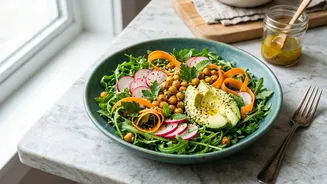
A mix of peppery arugula, hearty spinach, or tender butter lettuce provides a variety of flavours and textures. To make it a meal, aim for about two large handfuls of greens per person. You can also add bulk and crunch with other quickly prepped vegetables like grated carrots, sliced cucumbers, or halved cherry tomatoes. These not only add colour and vitamins but also satisfying crunch without any cooking required.
The Power-Up: No-Cook Proteins
To transform your salad from a light side into a filling main course, protein is non-negotiable. It’s what keeps you feeling full and energized long after you’ve finished eating. Luckily, many high-protein options require zero cooking. Canned goods are a pantry hero here: a rinsed can of chickpeas, kidney beans, or lentils adds instant plant-based protein and fibre. Canned tuna or salmon are also excellent, providing a significant protein boost along with healthy omega-3 fatty acids. Other fast options include pre-cooked hard-boiled eggs, a scoop of cottage cheese or Greek yogurt, or leftover rotisserie chicken. Even a handful of nuts or seeds will contribute to your protein goal.
The Energizer: Quick-Cooking Carbs
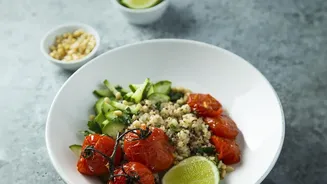
Carbohydrates are often wrongly omitted from salads, but they are crucial for providing sustained energy. Adding a source of complex carbs makes your salad more balanced and satisfying. While some grains take time, many are surprisingly quick. Quinoa, for instance, cooks in about 15 minutes, the perfect amount of time to prep your other ingredients. You can cook a batch at the beginning of the week to have on hand. Other fast-cooking options include whole-wheat couscous or bulgur, which often just need to be soaked in hot water for a few minutes. Leftover roasted sweet potatoes or even a slice of whole-grain toast on the side can also serve this purpose beautifully.
The Finisher: Healthy Fats and Flavour
Healthy fats are essential for absorbing vitamins from your vegetables and add a rich, satisfying element to your meal. Sliced avocado is a classic choice, offering creamy texture and heart-healthy fats. A sprinkle of nuts like walnuts or almonds, or seeds such as sunflower or pumpkin seeds, adds both healthy fats and a delightful crunch. For flavour, don’t hold back. Fresh herbs like parsley, mint, or basil can elevate a simple salad. Something sweet, like a few berries or apple slices, can provide a wonderful contrast. Olives or a crumble of feta cheese can offer a salty, savoury kick.
The Unifier: A Two-Minute Dressing
A homemade dressing can tie all the ingredients together and takes far less time than you think, while avoiding the added sugars and preservatives in many store-bought versions. A classic vinaigrette follows a simple formula: three parts oil to one part acid. Whisk together extra virgin olive oil with an acid like lemon juice or balsamic vinegar. Add a teaspoon of Dijon mustard to help it emulsify, a pinch of salt and pepper, and you're done. For a creamy dressing without mayonnaise, try blending hummus with a little water, lemon juice, and garlic. These dressings can be made in a jar and shaken, taking less than two minutes to prepare.