






An Audacious Pitch
In 2018, the Indian space sector was the sole domain of the venerable ISRO. The idea of a private company building and launching rockets was seen as unrealistic. Yet, two former ISRO scientists, Pawan Kumar Chandana and Naga Bharath Daka, saw an opportunity.
They quit their stable government jobs to found Skyroot Aerospace, driven by the belief that private enterprise could make space more accessible. Lacking institutional funding, they took a chance and sent a cold message on LinkedIn to Mukesh Bansal, the celebrated founder of Myntra and Cure.fit. This pitch was not for a new app or e-commerce platform, but for a rocket company—a high-risk, capital-intensive venture in a non-existent market.
The First Believer
Where other investors saw uncertainty, Mukesh Bansal saw potential. He became Skyroot's first and sole angel investor, committing an initial ₹10 crore. This was two years before the government officially opened the space sector to private players in 2020, a policy shift that would eventually attract a flood of institutional capital. Bansal’s investment was more than just money; it was a powerful vote of confidence in the founders' vision. It provided the critical runway for Skyroot to begin its ambitious work when no one else was willing to bet on them. When the COVID-19 pandemic later threatened the fledgling company's survival, Bansal stepped in again with another ₹2 crore to ensure the team stayed together.
The Long Road to 'Prarambh'
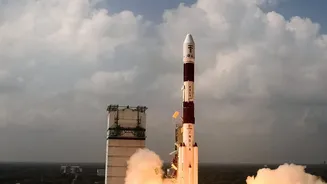
With Bansal's capital securing their early efforts, Chandana and Daka's team got to work developing their technology. Their focus was on creating launch vehicles for the growing small-satellite market, using innovations like carbon-composite structures and 3D-printed engines to drive down costs. The first major validation of their efforts came on November 18, 2022. Skyroot successfully launched the Vikram-S, a suborbital rocket, from the Satish Dhawan Space Centre. The mission, aptly named 'Prarambh' (The Beginning), was a historic moment, marking India’s first-ever private rocket launch. It proved that Skyroot’s technology worked and that a private Indian company could indeed reach for the stars.
From Suborbital to Orbit
The success of Prarambh was a turning point. It attracted significant funding from major investors like GIC, Singapore's sovereign wealth fund, and eventually propelled Skyroot to become India's first space-tech unicorn with a valuation over $1 billion. The ultimate goal, however, was always orbital launch. That dream was realised on July 18, 2026, when Skyroot's Vikram-1 rocket successfully lifted off and deployed its payload into orbit. This 'Mission Aagaman' (The Arrival) cemented India’s place as only the third country, after the US and China, with a private company capable of orbital launches. The entire journey, from a LinkedIn message to a successful orbital mission, was complete.
A Blueprint for Indian Deep Tech
Mukesh Bansal's initial ₹12 crore investment has since multiplied spectacularly, with his stake and partial exits valued at over ₹700 crore, a return of nearly 60 times. But the real return is far greater. The success of Skyroot demonstrates a powerful new model for the Indian startup ecosystem: experienced founders reinvesting not just their capital, but also their conviction, into challenging, deep-tech ventures. Bansal's early belief provided the crucial support for Skyroot to survive its riskiest phase, paving the way for institutional investors to follow. This story serves as a powerful blueprint for how patient, visionary capital can help build strategically important national capabilities and fuel the next generation of Indian innovation.