



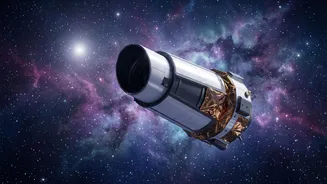

A New Eye on the Cosmos
Named after Dr. Nancy Grace Roman, NASA's first chief of astronomy and the celebrated “Mother of Hubble,” this new telescope is designed to tackle some of the biggest questions in astrophysics. Its primary mission goals are ambitious: to unravel the secrets
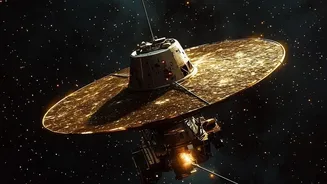
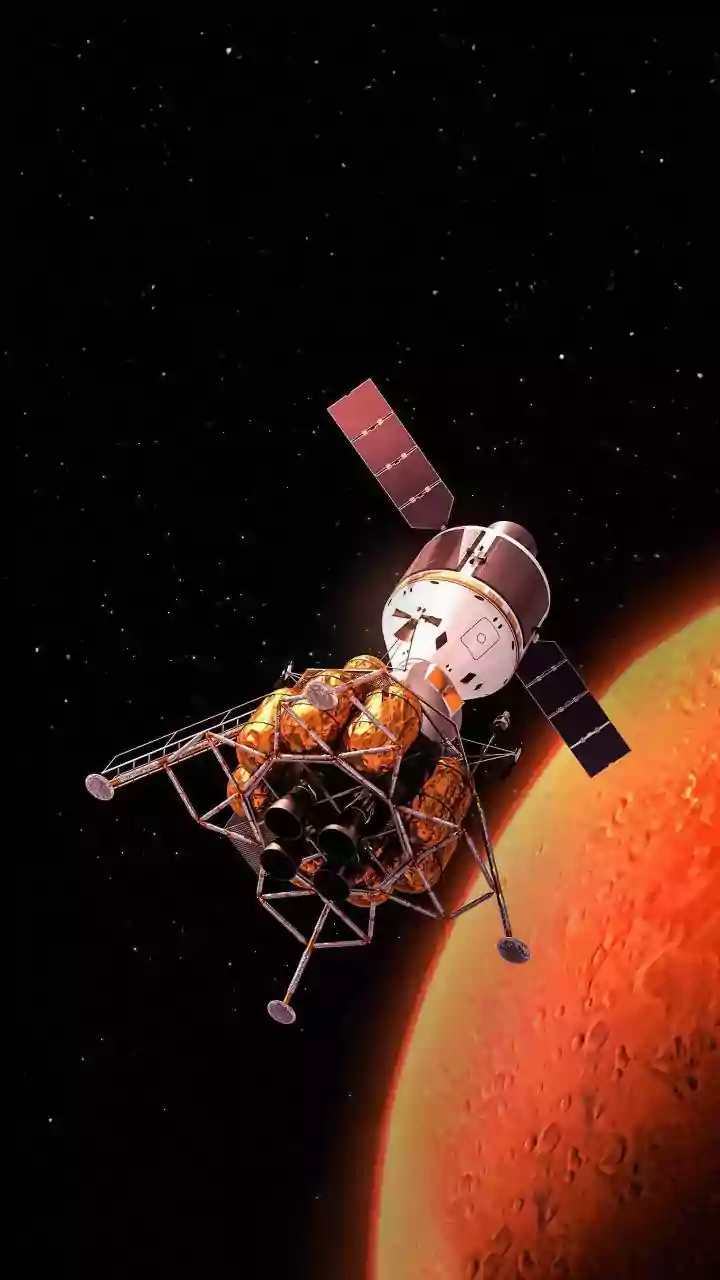
of dark energy and dark matter, discover thousands of new exoplanets, and provide breathtaking infrared views of the cosmos. Unlike its predecessors, Roman is built for speed and scale. After launching aboard a SpaceX Falcon Heavy, it is now journeying to its observation point about 1.5 million kilometers from Earth, a gravitationally stable spot known as Lagrange Point 2 (L2). This location keeps it cool and provides a clear, unobstructed view of the universe, far from the interfering light and heat of the Earth and Moon.
The Power of a Wide View
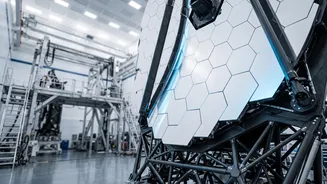
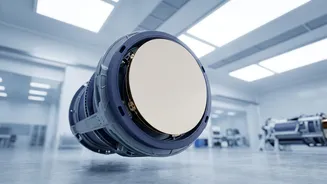
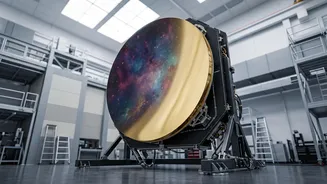
What truly sets the Roman Space Telescope apart is its incredible field of view. While it has the same size primary mirror as the Hubble Space Telescope—2.4 meters in diameter—its Wide Field Instrument (WFI) can capture an area of the sky at least 100 times larger than Hubble's infrared camera in a single snapshot. Imagine trying to photograph a sprawling landscape. While Hubble would capture a single, exquisitely detailed tree, Roman will capture the entire forest in the same amount of time and with the same sharpness. A single Roman image will contain the detail of 100 Hubble photos. This panoramic capability will allow scientists to create vast cosmic maps, surveying billions of galaxies over its five-year primary mission.
Unlocking Cosmic Mysteries
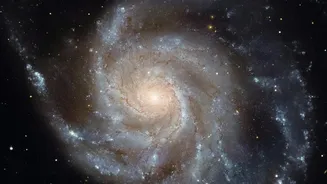
One of Roman’s key objectives is to investigate dark energy, the mysterious force believed to be causing the universe’s expansion to accelerate. By imaging hundreds of millions of galaxies, the telescope will measure how their distribution and the expansion of the universe have changed over cosmic time. This massive dataset will provide crucial clues about the nature of dark energy, which makes up an estimated 68% of the universe but remains one of its biggest enigmas. Roman's ability to peer deep into the past—by capturing light that has traveled for billions of years—will effectively allow astronomers to watch the universe's evolution unfold.
Hunting for Thousands of New Worlds
Beyond studying galaxies, Roman is a prolific planet hunter. It is expected to discover thousands of exoplanets, adding significantly to the current catalog. It will do this primarily using a technique called gravitational microlensing. This method detects planets by observing the way a star's gravity can bend and magnify the light from a more distant star that passes behind it. This technique is particularly effective at finding planets that are far from their host star or even rogue planets that drift through space without a star at all. In addition to finding planets, Roman is equipped with a Coronagraph Instrument, a technology demonstration designed to block the overwhelming glare of a star. This will allow it to take direct pictures of giant, Jupiter-like planets—a feat that has been incredibly difficult until now.