




A Historic Snag in South Texas
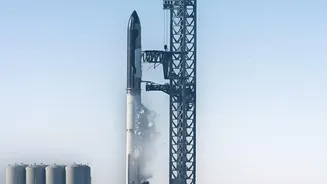
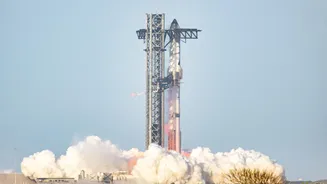
After launching a day earlier and completing 14 orbits of Earth, the Starship vehicle, known as Ship 42, performed a fiery reentry before descending toward its launch site in Starbase, Texas. Onlookers watched as the 171-foot-tall spacecraft executed
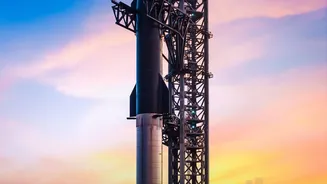
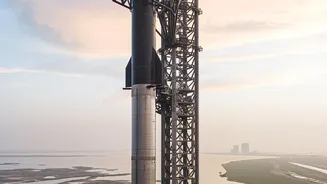
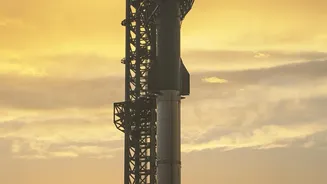
a final flip maneuver, ignited its Raptor engines to slow its descent, and then gently settled into the grasp of two giant mechanical arms on the launch tower. These arms, nicknamed 'Mechazilla' or the 'chopsticks', closed around the ship, successfully completing the first-ever catch of an orbital-class upper stage. The maneuver, long envisioned by CEO Elon Musk, marks a pivotal moment in the quest for fully reusable rockets.
Why Catch a Rocket?
The primary reason for this complex maneuver is rapid reusability. By catching the Starship, SpaceX aims to eliminate the need for heavy, complex landing legs, which frees up mass for more payload. More importantly, the tower catch returns the vehicle directly to its launch mount, drastically cutting down the turnaround time between missions. The long-term vision is an airline-like operation where a rocket can land, be refuelled, and launch again in a short period. This achievement is the most significant step yet toward that goal, moving beyond simply landing boosters to recovering the entire spacecraft that travels to and from orbit.
Not a Flawless Mission
While the ship catch was a resounding success, the mission wasn't perfect. SpaceX's initial goal was a 'double catch', recovering both the Starship and its Super Heavy booster. However, the booster experienced an issue during its boostback burn due to what was described as low fuel mass. Its guidance system automatically aborted the tower landing attempt and diverted the booster for a splashdown in the Gulf of Mexico, where its flight termination system was activated. SpaceX had previously succeeded in catching three Super Heavy boosters on prior flights, but this attempt with a newer version of the booster fell short. The company is investigating the cause of the failure.
The Impact on Space and Business
Successfully recovering and reusing the Starship upper stage is a game-changer for SpaceX's business model. It dramatically lowers the cost per launch, which is crucial for deploying its next-generation Starlink V3 satellite constellation. These larger satellites require Starship's massive payload capacity. Furthermore, this capability is essential for NASA's Artemis program, which relies on Starship for a lunar lander. Demonstrating reusability at this scale makes ambitious projects, from megaconstellations of satellites to eventual missions to Mars, far more economically viable. Following the successful catch, Elon Musk noted that the ship's heat shield and engines looked to be in great condition, suggesting it could fly again after limited refurbishment.
What Comes Next?
With the first ship catch accomplished, SpaceX will focus on repeating the success and solving the issues that prevented the booster's recovery. The company will analyze the vast amount of data from Ship 42's flight and recovery to refine its systems. Elon Musk has already turned his attention to the future, discussing plans for an even larger Starship V4. The next major milestone will be to refly a recovered Starship, proving the cycle of reusability is complete. As one SpaceX commentator said during the broadcast, 'We caught a Starship, and now everything changes'.