






The Golden Swap: Why Jaggery?
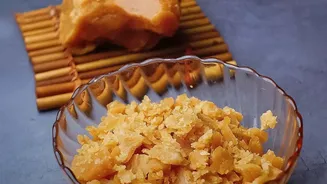
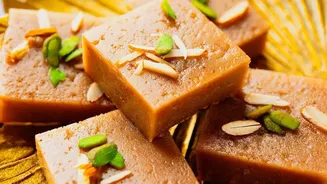
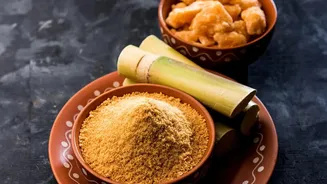
Jaggery, or 'gur' as it is known across India, is an unrefined sugar made from sugarcane juice or date palm sap. Unlike white sugar, which is heavily processed, jaggery retains molasses, giving it a golden-brown hue and a host of naturally occurring minerals
like iron, magnesium, and potassium. Its flavour is complex and earthy, with notes of caramel and toffee that add a distinct richness to desserts. Traditionally used in Ayurvedic practices, jaggery is believed to aid digestion and offer a gentle energy boost, making it a popular choice in households for generations. This return to jaggery isn't just about health; it's a rediscovery of authentic, traditional flavours.
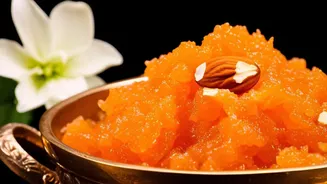
Gajar Ka Halwa with a Jaggery Twist
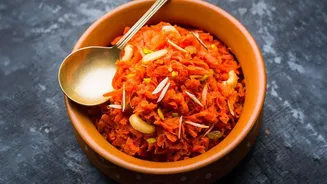
When used in Gajar Ka Halwa, jaggery transforms the dessert. While the classic recipe is sweet and milky, using jaggery introduces a smoky sweetness that complements the earthy carrots perfectly. The process remains largely the same: grated carrots are slow-cooked in milk until tender, but the jaggery is typically added towards the end of the cooking process. This is because adding jaggery to boiling milk can sometimes cause it to curdle. By waiting until the milk has reduced, you ensure a smooth, creamy texture. The final dish is a less intensely sweet, more nuanced version of the original, with a beautiful golden-brown colour and a richer aroma.
1. Bengal's Winter Jewel: Nolen Gurer Payesh
Come winter in West Bengal, and a special kind of jaggery floods the markets: Nolen Gur, or date palm jaggery. This seasonal delicacy is prized for its unique smoky fragrance and liquid gold consistency. Its most famous application is in Nolen Gurer Payesh, a rice pudding that is central to Bengali celebrations. Made with fragrant Gobindobhog rice, full-fat milk, and the star ingredient, Nolen Gur, this payesh is a masterclass in simplicity. The rice and milk are simmered patiently until thick and creamy, and the jaggery is stirred in right at the end, off the heat, to prevent the milk from splitting and to preserve the gur's delicate aroma. The result is a dessert that is deeply comforting and quintessentially Bengali.
2. Maharashtra's Festive Flatbread: Puran Poli
Puran Poli is a beloved Maharashtrian flatbread that is a staple during festivals like Holi and Gudi Padwa. 'Puran' refers to the sweet filling, and 'poli' is the bread. The heart of this dish is its filling: a soft, fragrant mixture of cooked chana dal (split Bengal gram) and jaggery, spiced with cardamom, nutmeg, and sometimes ginger powder. This sweet lentil mixture is mashed until smooth, then stuffed inside a soft dough made from whole wheat flour or a mix of wheat and plain flour. The stuffed poli is then rolled thin and cooked on a tawa with ghee until it puffs up and is golden-brown on both sides. Served warm with a generous dollop of ghee, it is pure comfort food.
3. The Winter Warmer: Til Gud Ladoo
Associated with the harvest festival of Makar Sankranti, Til Gud Ladoo is a simple, wholesome sweet enjoyed across many parts of India. 'Til' means sesame seeds, and 'gud' is jaggery. These ladoos are made by mixing roasted sesame seeds with melted jaggery and rolling them into balls while the mixture is still warm. Often, roasted peanuts and desiccated coconut are also added for extra crunch and flavour. The warmth from the jaggery and sesame is believed to be beneficial during the cold winter months. In Maharashtra, these ladoos are exchanged with the saying, 'Tilgul ghya, god god bola,' which translates to 'Take this sweet and speak sweet words'.
4. Tamil Nadu's Festive Delicacy: Adhirasam
Adhirasam is a traditional sweet from Tamil Nadu, especially popular during Diwali. It resembles a small, deep-fried doughnut but has a unique chewy texture and rich flavour. The process is an art form that requires patience. It starts with making fresh rice flour from soaked and partially dried raw rice. A syrup is made from jaggery, cooked to a specific 'soft ball' consistency. This hot syrup is then mixed with the rice flour to form a dough, which is allowed to ferment for a day or two. This resting period is crucial for developing the flavour and texture. Small patties are then shaped, deep-fried in oil on low heat until dark golden brown, and pressed to remove excess oil. The final Adhirasam is crispy on the outside and soft and chewy inside.
5. Goa's Aromatic Treat: Patoleo
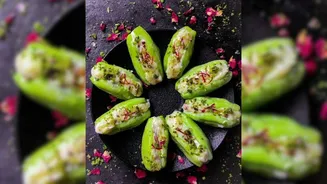
Patoleo is a unique Goan sweet steamed inside fresh turmeric leaves, which impart an unforgettable aroma. This dessert is traditionally prepared by Goan Catholics for the Feast of the Assumption on August 15th and by Goan Hindus for Nag Panchami and Ganesh Chaturthi. The preparation involves making a filling of freshly grated coconut and jaggery, scented with cardamom. A paste made from rice flour (or soaked and ground rice) is spread thinly onto a turmeric leaf. The sweet coconut-jaggery filling is placed in the center, and the leaf is folded and sealed. These parcels are then steamed for about 15-20 minutes. Unwrapping the warm Patoleo releases the fragrant steam of the turmeric leaf, revealing the soft, sweet delicacy within.