

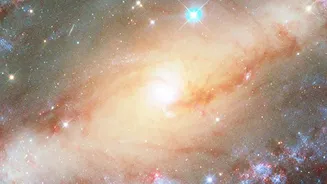
A Cosmic Slowdown Next Door
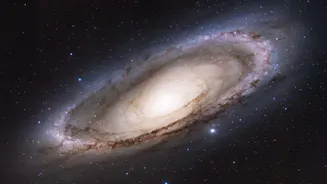
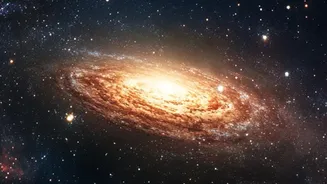
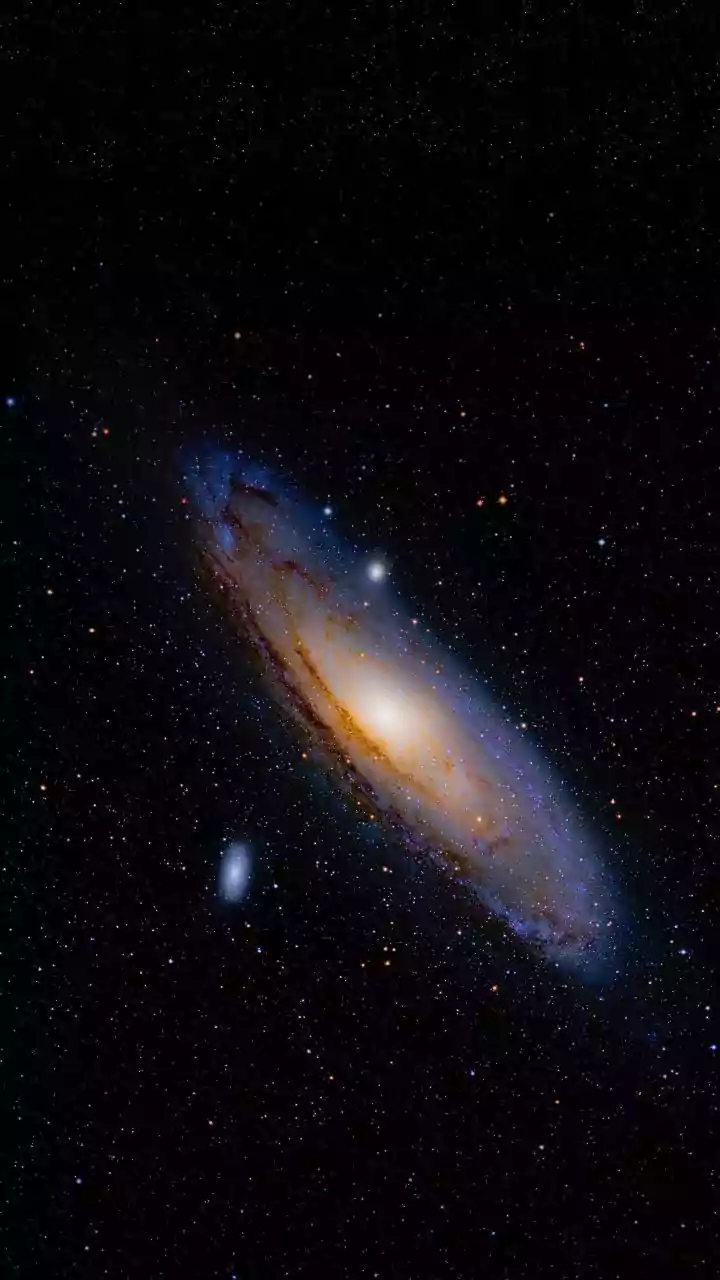
Recent analysis of data from the Hubble Space Telescope has focused on our closest large galactic neighbor, Andromeda (also known as M31), which is about 2.5 million light-years away. The findings, published in The Astrophysical Journal, show a dramatic
slowdown in the rate at which Andromeda is forming new stars. Astronomers found that this decline has been happening over the last 500 million years, but it has become significantly more pronounced in the last 40 million years. About 500 million years ago, Andromeda was producing stars equivalent to about one solar mass per year. That rate dropped by half by 40 million years ago, and today, it has plummeted to just one-fifth of a sun's mass per year.
How Hubble Reads the Stars
To understand a galaxy's past, astronomers study its stars, which act as a kind of fossil record. The Hubble telescope's incredible resolution allowed scientists to individually analyze about 200 million stars across two-thirds of Andromeda's disk. Massive stars burn very hot and bright, appearing blue, but they have short lifespans. Less massive stars are cooler, redder, and live much longer. By mapping the color of stellar populations, scientists can determine where and when star birth has occurred. Regions with a higher fraction of blue stars indicate recent star formation. By dividing the galaxy into thousands of sections and analyzing the star colors within them, the team pieced together a detailed history of Andromeda's star-making activity.
The Usual Suspects for a Slowdown
Galaxies generally stop forming stars for a few key reasons. The most straightforward is simply running out of the necessary fuel: vast clouds of cold, dense gas. Without this raw material, gravity cannot trigger the collapse needed to ignite new suns. Another factor can be feedback from events within the galaxy itself. Energetic processes like supernova explosions or jets from a central supermassive black hole can heat up or blow away the cold gas, effectively shutting down the star factory in a process astronomers call "quenching." However, the new study on Andromeda suggests it is not running out of material, but is rather experiencing a natural winding down.
Why the Recent Drop-Off?
The sharp decline in recent millennia seems to be driven by decreasing activity in a specific part of Andromeda: a massive star-forming ring located about 32,000 light-years from the galactic center. This ring was a hub of recent activity, and as it quiets down, the entire galaxy's average rate of star birth has dropped. Researchers believe this is a natural winding down after a much more active period. About two billion years ago, Andromeda experienced a major burst of star formation, likely triggered by a merger or interaction with another galaxy. One suspect in the recent slowdown is Andromeda's small satellite galaxy, M32. Data suggests that the part of Andromeda's disk closest to M32 showed decreased star formation starting around 60 million years ago, which could help time the last interaction between the two galaxies.
A Glimpse into a Dimmer Future
The story of Andromeda provides a valuable case study for how galaxies like our own Milky Way might age and evolve. The universe as a whole hit its peak star-formation period billions of years ago and has been on a long, slow decline ever since. This eventual fade is a fundamental part of the universe's life cycle. As the available cold gas is used up, heated, or blown away, the stellar nurseries will grow quiet. The bright, blue, massive stars will die out first, leaving behind a cosmos dominated by older, cooler, redder stars. While this future is trillions of years away, studying the slowdown in a nearby galaxy like Andromeda gives us a tangible preview of the universe's ultimate, quiet fate.