


The 'Too Big, Too Soon' Problem
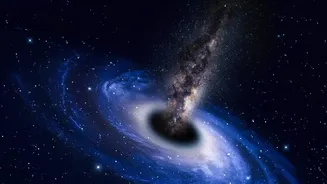
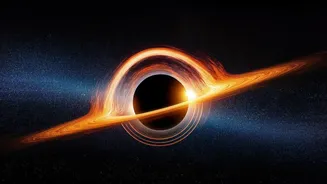
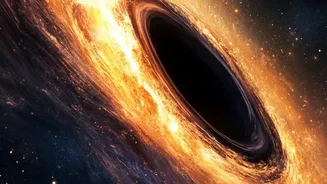
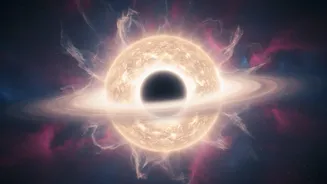
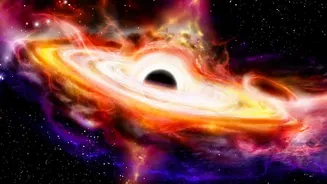
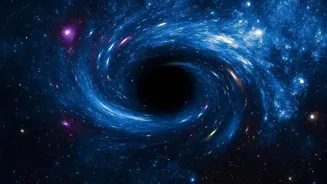
Imagine looking back in time to the universe’s infancy, less than a billion years after the Big Bang, and finding giants. That is the exact problem astronomers have faced for years. They have observed supermassive black holes—monsters with the mass of
millions or even billions of suns—existing at a time when, according to our leading theories, they simply should not have had enough time to grow that large. Standard black holes form from the collapse of massive stars. They then grow by slowly consuming gas, dust, and other stars. This is a gradual process. For these early behemoths to exist, it would be like finding a fully grown oak tree just days after planting the acorn; the timeline just doesn't add up.
A New Clue from the Cosmic Dawn
Using the incredible power of the James Webb Space Telescope (JWST), astronomers have been peeling back the layers of the early cosmos. A recent observation has provided the most promising clue yet to solving this long-standing mystery. Scientists have identified what they believe to be a 'direct collapse' black hole seed. This is not a black hole that started from a single dead star, but something much, much bigger. The new observations point to an object in the early universe that suggests a different, more rapid formation path was possible.
What is a 'Direct Collapse' Black Hole?
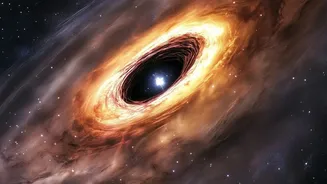
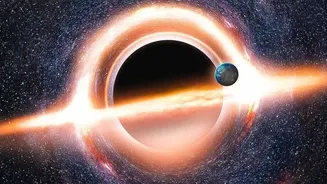
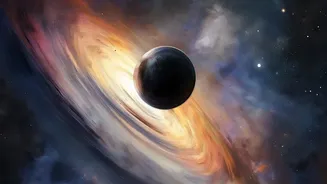
The 'direct collapse' theory offers a radical shortcut. It proposes that under the unique conditions of the primordial universe, a gigantic cloud of pure hydrogen and helium gas, hundreds of thousands of times the mass of our sun, could have collapsed in on itself. Instead of fragmenting to form hundreds of thousands of individual stars, the immense pressure and specific environment caused the entire cloud to collapse directly into a single, massive black hole 'seed'. This would be like skipping the acorn stage entirely and starting with a young tree. This process would create a black hole with a huge head start, weighing in at tens or even hundreds of thousands of solar masses from the moment of its birth.
Rewriting the Story of Galaxies
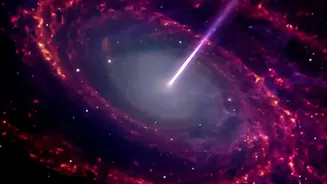
If this direct collapse model proves to be common, it could fundamentally change our understanding of how the first galaxies formed. The conventional view is that stars formed first, which then clumped together to create galaxies, with a black hole forming in the centre much later. However, this new evidence supports an alternative picture where these massive black hole seeds formed first. Their immense gravitational pull would then have acted as an anchor, a cosmic seed around which gas and stars could gather, rapidly building the first galaxies. In this scenario, the supermassive black hole is not just a resident of the galaxy; it is the architect.
What Happens Next?
This discovery, while groundbreaking, is just one piece of the puzzle. Scientists are now on the hunt for more of these objects to confirm if this is a rare exception or the rule for the early universe. Each new candidate will be scrutinised by telescopes like the JWST, with researchers looking for the unique signatures that distinguish a direct collapse event from other cosmic phenomena. By building a census of these primordial giants, scientists hope to create a complete timeline of how the universe's most massive structures came into existence. It's a detective story 13 billion years in the making, and we are finally beginning to read the first pages.