






A Neurochemical Cocktail for Happiness
Physical activity is a well-known mood booster, but dancing adds a few extra ingredients. The combination of music, movement, and social interaction triggers a powerful neurochemical release. Your brain gets a hit of endorphins from the exercise, which
act as natural mood elevators and pain relievers. At the same time, listening to music you enjoy prompts a release of dopamine, the neurotransmitter associated with pleasure and reward. This combination helps reduce symptoms of anxiety and depression, creating a natural high that leaves you feeling calmer and more positive. Studies show this unique trifecta is a primary reason dance often feels more motivating and emotionally rewarding than other forms of exercise.
The Power of Synchronized Connection
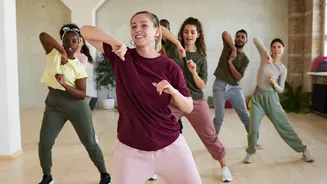
There's a special kind of magic that happens when people move in sync. Scientists call this 'interpersonal synchrony,' and it's a powerful social glue. Moving in time with others, whether it's a choreographed routine or simply swaying to the same beat, blurs the lines between 'self' and 'other'. This process enhances feelings of similarity, trust, and cooperation. It also triggers the release of oxytocin, often called the 'bonding hormone,' which promotes feelings of attachment and safety. This is why dancing in a group can make you feel more connected to others and reduce feelings of loneliness, creating a sense of community and belonging.
A Workout for Your Brain
Learning choreography is more than just memorising steps; it's a full-brain workout that enhances cognitive function. The process requires you to engage multiple cognitive skills at once: memory, attention, and spatial awareness. Remembering sequences improves both short-term and long-term memory, while navigating a dance floor with others sharpens your spatial processing. Furthermore, dancing demands quick decision-making as you adjust your movements to the music and your partners. This boosts mental agility, problem-solving skills, and neuroplasticity—the brain's ability to form new neural connections. In fact, one study found that dancing was the only physical activity linked to a reduced risk of dementia.
An Escape From Mental Overload
Group dancing acts as a form of active meditation. It requires intense focus on the present moment—on the rhythm, your body's movements, and your interaction with others. This state of 'flow' provides a much-needed escape from the repetitive negative thoughts that often accompany stress and anxiety. By demanding your full attention, dancing effectively interrupts the mental chatter and grounds you in the here and now. The physical release of tension through movement helps regulate the nervous system, shifting it from a stressed 'fight-or-flight' state to a calmer, more relaxed one. This focused engagement gives your mind a break from daily worries, leaving you feeling refreshed and centered.
A Boost in Confidence and Self-Expression
Mastering a new dance move or simply allowing yourself to move freely in a supportive group environment can do wonders for your self-esteem. Dance provides a safe outlet for emotional expression without words, allowing you to channel feelings in a healthy and creative way. As you gain proficiency and receive positive feedback, your confidence grows. This sense of accomplishment, combined with the feeling of being part of a team, reinforces a positive self-image. It empowers you by providing a sense of agency and control over your body and your ability to learn new skills, translating into greater confidence in other areas of your life.