






What is the Intelligent Traffic Management System?
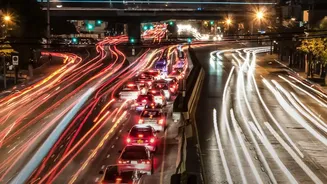
The Union Cabinet has approved the ambitious Rs 1,789.52 crore project to install an Intelligent Traffic Management System (ITMS) across the national capital. This is essentially a new 'brain' for the city's road network. Instead of the current system
where most of the 1,500-plus traffic signals run on fixed timers, the ITMS will use technology to manage traffic based on what's actually happening on the roads in real-time. The project will be implemented by the Delhi Police over three phases within a 24-month period, covering 42 of the city's busiest traffic corridors. The Centre for Development of Advanced Computing (C-DAC) will act as the technical consultant for the project.
How the AI Technology Works
The core of the ITMS is its Adaptive Traffic Control System (ATCS). This system relies on a network of AI-powered cameras and sensors at 1,092 locations to continuously gather data on traffic density, vehicle speed, and queue lengths at intersections. This information is then fed into algorithms that automatically adjust signal timings. For example, if one road at a crossing has heavy congestion while the intersecting road is relatively empty, the system can allocate a longer green light to clear the jam. The goal is to coordinate signals along entire corridors to create 'green waves', allowing for smoother traffic flow and reducing unnecessary stoppages.
Smarter Enforcement and Safer Roads
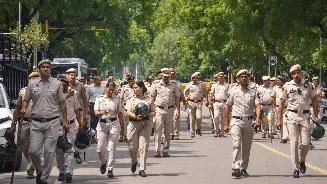
Beyond just managing flow, the ITMS is designed to significantly boost automated enforcement at 1,029 locations. The AI cameras will be capable of detecting a wide range of violations, including red-light jumping, speeding, driving on the wrong side of the road, and stop-line violations. The system will also be used to spot offences like drivers using mobile phones or riders without helmets. Furthermore, the AI analytics will assist police in identifying stolen or blacklisted vehicles and tracking down repeat offenders or those involved in hit-and-run incidents by checking number plates against official databases.
Key Benefits for Commuters and Emergency Services
A major promised feature is the creation of priority 'green corridors' for emergency vehicles. The system can dynamically change signals to provide a clear path for ambulances, potentially cutting down critical response times. For the everyday commuter, the project aims to provide real-time traffic information through Variable Message Signs on the roads and by sharing data with digital navigation service providers. This means drivers will get timely updates on congestion, accidents, or diversions, allowing them to make better route choices. The project was first proposed ahead of the 2010 Commonwealth Games but has now been significantly expanded with modern technology.
Will This Finally Solve Delhi's Traffic Woes?
While the ITMS represents a significant leap forward from the current manual and timer-based systems, it is not a magic wand. Delhi has over 71 lakh active registered vehicles, a number that has grown much faster than the road infrastructure itself. The success of this high-tech system will also depend on how it handles the unpredictable nature of Indian traffic, including driver behaviour and unexpected obstructions. Similar AI-based signal systems have been functional in cities like Bengaluru for years with mixed results. While this project is designed to make the existing road network far more efficient, a long-term solution to congestion will require a multi-pronged approach that includes further improvements in public transport and infrastructure.