





Gaganyaan: India's Leap into Orbit
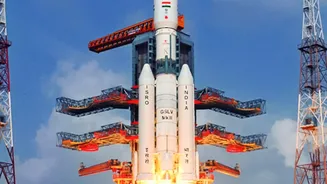
At its heart, the Gaganyaan programme is ISRO's endeavor to demonstrate human spaceflight capability by launching a crew of astronauts into an orbit of 400 kilometres for a mission lasting several days. Upon successful completion, India will join the elite
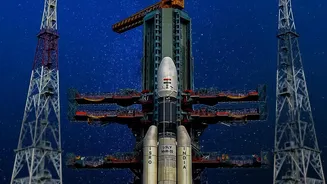
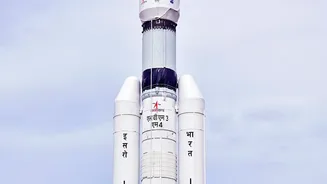
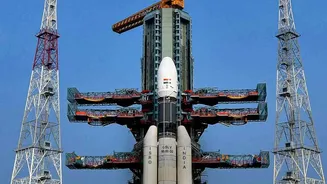
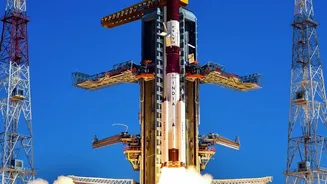
group of nations—the United States, Russia, and China—capable of independently sending humans to space. The mission involves the human-rated LVM3 launch vehicle, a sophisticated crew module to house the astronauts, a life support system to create an Earth-like environment in space, and a reliable crew escape system. Before the first crewed flight, targeted for 2027, ISRO has planned a series of uncrewed test missions to validate all systems.
The Chosen Few: Meet the Vyomanauts
The nation was formally introduced to its astronaut-designates in February 2024: Indian Air Force Group Captains Prashanth Balakrishnan Nair, Ajit Krishnan, Angad Pratap, and Wing Commander Shubhanshu Shukla. All four are accomplished test pilots, selected through a rigorous process for their extensive flying experience, physical fitness, and psychological resilience, traits essential for the demanding environment of space. While a crew of two or three is expected for the first mission, all four are undergoing the full spectrum of training to prepare for any contingency and future flights.
A Foundation in Russia, Finesse in India
The astronauts' journey began with a foundational training course at Russia's renowned Gagarin Cosmonaut Training Centre (GCTC). This phase, which started in early 2020, covered generic spaceflight aspects, including acclimatising to gravitational changes and initial survival skills. After returning to India, they commenced mission-specific training tailored to the unique systems of Gaganyaan. This India-based training is headquartered at ISRO's Human Space Flight Centre (HSFC) and the state-of-the-art Astronaut Training Facility (ATF) in Bengaluru.
Inside the Indian Training Regimen
The training in Bengaluru is a comprehensive blend of theory and practice. The curriculum includes in-depth academic courses on the Gaganyaan flight systems, delivered by faculty from ISRO and the Indian Institute of Science. A major focus is on hands-on experience using advanced simulators. These include static mock-ups for habitability trials, virtual reality (VR) simulators for practising procedures, and dynamic simulators that replicate flight conditions. The training covers everything from nominal flight procedures to handling emergencies, mastering the crew module's controls, and performing scientific experiments in microgravity. Physical and mental conditioning are also key, with aero-medical training, flying practice, and even yoga forming part of their packed schedule.
Global Collaboration for Advanced Skills
Recognising the value of international expertise, India has also partnered with NASA. As part of a strategic framework for cooperation, Indian astronauts are undergoing advanced training at NASA's Johnson Space Center in Houston. This collaboration provides them with exposure to International Space Station (ISS) systems and protocols, with plans for one Indian astronaut to fly to the ISS on a separate mission. This advanced training not only enhances the crew's skillset for Gaganyaan but also deepens interoperability for future collaborative space missions, such as India's planned 'Bharatiya Antariksh Station' space station by 2035.