





The Race Against Time
The 508-kilometre Mumbai-Ahmedabad High-Speed Rail (MAHSR) corridor has been a flagship infrastructure project, symbolizing India's technological and economic aspirations. After its launch in 2017, the project faced considerable delays, primarily due
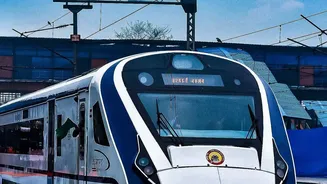
to complex land acquisition issues, particularly in Maharashtra, and pandemic-related disruptions. However, recent years have seen a dramatic acceleration in progress. Railway Minister Ashwini Vaishnaw recently confirmed that testing for India's first indigenously developed bullet train is expected to begin by May or June 2027. This announcement signals a critical shift from planning and groundwork to the final stages of execution, with the first operational service on a section of the route anticipated by the end of that year.
Clearing the Land Hurdle
One of the most significant factors enabling the 2027 timeline has been the successful completion of land acquisition. For years, securing the entire 1,389.5-hectare stretch was the project's primary bottleneck. Political hurdles and local opposition, especially in Maharashtra, stalled progress significantly. However, a concerted push has resulted in the entire corridor now being acquired, allowing construction to proceed without impediment across both Gujarat and Maharashtra. With this crucial hurdle cleared, the National High Speed Rail Corporation Limited (NHSRCL), the agency implementing the project, has been able to fast-track civil works across the entire route, a key reason why the 2027 target is now considered achievable.
A Feat of Concrete and Steel
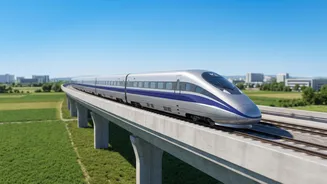
The visible progress on the ground is perhaps the most compelling evidence of the project's momentum. As of mid-2026, construction of piers (the support pillars) has been completed along more than 453 km of the 508 km route. Over 350 km of the elevated viaduct—the deck on which the tracks will sit—is also in place. Work is advancing simultaneously on multiple fronts, including the construction of 12 stations, with foundation work complete at eight. In Maharashtra, significant strides have been made on the complex 135 km stretch, including breakthroughs in several mountain tunnels and progress on India's first 7-km undersea rail tunnel. This rapid, coordinated construction across hundreds of kilometres is a massive logistical achievement, making the 2027 trial run a concrete possibility.
Technology and Expertise in Action
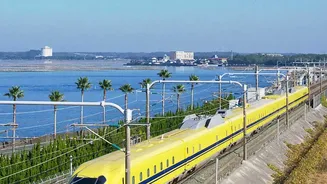
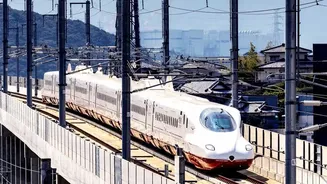
The project is not just about civil engineering; it's a massive technological undertaking. The MAHSR corridor is being built with technical and financial assistance from Japan, utilizing its world-renowned Shinkansen technology. This partnership ensures the highest standards of safety and reliability. Work is now shifting from just concrete and steel to more technical layers. This includes the installation of the J-Slab ballastless track system, electrification infrastructure like overhead masts, and advanced signalling systems. Furthermore, progress is being made on the 'Make in India' front, with the first body frame of an indigenous high-speed train recently completed and sent for structural testing. This dual approach of leveraging proven Japanese technology while building domestic capacity is crucial to the project's long-term success.
What to Expect in 2027
The 2027 trial run will not cover the entire 508-km route at once. According to official announcements, the first tests will take place on a completed section in Gujarat, likely between Surat and Bilimora or Surat and Vapi. Following a testing period of two to four months, this section is expected to be opened for commercial operations. The rest of the corridor will be commissioned in phases, with the final Mumbai link completing the high-speed connection. Once fully operational, the bullet train is expected to reduce the travel time between Mumbai and Ahmedabad to just under two hours for the fastest service, a revolutionary change from the current six to eight hours by rail.