






Why a Cover Isn't a Cure-All
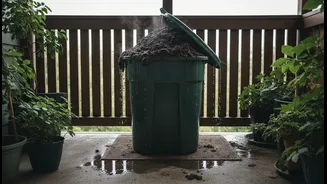
A cover is excellent for shielding your compost from direct rain, but it can't solve moisture problems that originate from within the bin. In fact, a tight-fitting lid can sometimes make things worse by trapping the moisture that is naturally released
as food scraps decompose. Composting is a biological process driven by microorganisms that need a balanced environment of air and water to thrive. When a bin is too wet, it becomes an anaerobic (oxygen-deprived) environment. This not only creates unpleasant odours but also slows down decomposition dramatically, turning your potential black gold into a sludgy mess. The ideal compost pile should feel like a wrung-out sponge: damp, but not dripping wet.
The Prime Suspect: Too Many 'Greens'
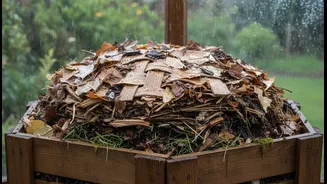
The most common reason for overly humid compost is a simple imbalance of ingredients. Compost needs a healthy mix of nitrogen-rich 'greens' and carbon-rich 'browns'. 'Greens' are your wet kitchen scraps: vegetable peels, fruit cores, and coffee grounds. These materials have a very high water content. 'Browns' are dry materials like shredded newspaper, cardboard, dried leaves, and coco-peat (coir), which is readily available in India. When you add too many greens without enough browns to absorb the excess moisture, the mixture becomes saturated. Think about the high water content in things like cucumber peels, watermelon rinds, or leftover gourds—common items in Indian kitchens. Without a carbon-rich counterpart, that water has nowhere to go.
Your Compost Is Suffocating
Like any living system, your compost needs to breathe. Airflow is critical for the aerobic bacteria that do the hard work of decomposition efficiently and without bad smells. On a balcony, especially in a compact bin, material can easily become compacted. When wet food scraps are layered on top of each other, they squash down, eliminating the air pockets necessary for oxygen to circulate. A covered bin on a sheltered balcony might also get less natural air circulation than a pile in an open garden. This lack of oxygen is what leads to the foul, ammonia-like smells characteristic of an anaerobic compost pile.
Solution 1: Master the Material Mix
The fix for a soggy bin almost always starts with adding more 'browns'. A good rule of thumb is to add at least as much brown material by volume as you do green material—some experts even recommend a ratio of two parts brown to one part green. Make it a habit: every time you add a container of kitchen scraps to your bin, add a similar-sized container of browns. Keep a bag of shredded cardboard, torn-up egg cartons, coco-peat, or dry leaves right next to your compost bin for convenience. When you add the browns, mix them in rather than just layering them on top. This helps absorb the existing excess moisture and creates a better structure for airflow.
Solution 2: Boost the Airflow
To combat compaction and introduce more oxygen, you need to aerate your compost. This simply means turning or mixing the contents of your bin regularly, perhaps once or twice a week, using a small rake or a compost turning tool. This action breaks up clumps, distributes moisture, and allows air to penetrate the pile. If your bin seems particularly prone to becoming waterlogged, check that its drainage holes are not blocked. You can even consider drilling a few extra ventilation holes in the sides of your compost bin to improve passive airflow, which is especially helpful in a static bin on a balcony.
Navigating High-Humidity Climates
Composting in India comes with the unique challenge of seasonal high humidity, particularly during the monsoon. When the air itself is saturated with moisture, evaporation from your compost bin slows down significantly. During these humid months, you need to be extra vigilant. Be more generous with your 'browns' to counteract both the moisture from your scraps and the ambient humidity. Ensure your lid is not sealed airtight; leaving it slightly ajar or ensuring you have good ventilation holes will allow some moisture to escape. Avoid turning your pile during heavy rain if it's in an exposed part of the balcony, as this can introduce even more water.