





The Flying Taxi Takes Shape
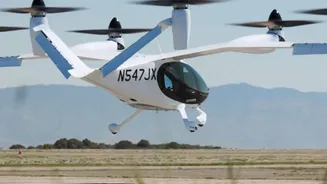
First, let's break down the jargon. An eVTOL is an 'electric Vertical Take-Off and Landing' aircraft. Think of it as a quiet, electric-powered hybrid of a helicopter and a small plane. They can lift off vertically from small pads called 'vertiports',
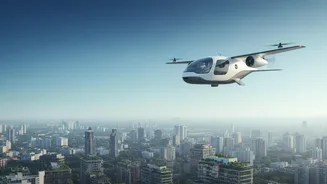
then tilt their rotors forward to fly like a conventional aircraft, making them efficient for cross-city travel. The goal is to create a new layer of urban transport, zipping over traffic jams. Sarla Aviation's planned production model, named 'Shunya', is a six-passenger plus pilot aircraft. Recent government backing has solidified the timeline, with India's Aviation Minister stating a goal to see these machines flying by 2028.
Why Put a Pilot in the Cockpit?
While many global competitors are chasing the headline-grabbing goal of fully autonomous, pilotless air taxis, Sarla Aviation's strategy is to start with a human pilot. This isn't a lack of ambition; it's a calculated and pragmatic business decision. The primary reasons are safety, regulation, and public trust. Getting an aircraft certified for flight is an incredibly rigorous process. Getting a completely new type of autonomous passenger aircraft certified is an exponentially harder challenge. India's Directorate General of Civil Aviation (DGCA) has already established a clear regulatory framework for piloted eVTOLs, covering aircraft type certification, vertiport standards, and pilot training requirements. By designing an aircraft with a pilot, Sarla Aviation aligns with this existing pathway, dramatically reducing its time to market.
A Calculated Path to Commercialisation
Starting with a pilot-operated service de-risks the entire venture. It allows the company to begin commercial operations, generate revenue, and gather invaluable real-world data sooner. This data on flight patterns, battery performance in Indian weather conditions, and operational logistics is critical for refining the technology. Furthermore, having a human pilot on board is essential for building public confidence. Passengers are far more likely to embrace this new mode of transport if they see a trained professional in the cockpit, at least initially. This phased approach allows the public to grow accustomed to the technology, paving the way for eventual acceptance of autonomous flight when the technology and regulations have matured. This strategy mirrors the evolution of elevators, which once had human operators before becoming fully automated.
Building an Entire Ecosystem
An eVTOL is useless without the infrastructure to support it. Sarla Aviation is actively working on this front, signing an agreement with UK-based Urban-Air Port to co-develop the ground infrastructure needed for its 'Shunya' aircraft. This includes designing and deploying vertiports, charging stations, and passenger handling facilities. The company has also forged strategic partnerships, such as with Siemens, to use a 'digital thread' approach that integrates design, simulation, and lifecycle management to speed up development and certification. These collaborations show that Sarla's plan isn't just about building an aircraft, but about creating the entire ecosystem required for urban air mobility to function at scale.
The Road to an Autonomous Future
The long-term vision for Sarla Aviation, and the industry as a whole, remains a future of quiet, efficient, and fully autonomous air travel. By starting with a piloted model, the company is not abandoning this vision but creating the most logical and viable bridge to get there. The experience gained from millions of piloted flight hours will be the foundation upon which the safety case for autonomy is built. This step-by-step evolution ensures that when pilotless eVTOLs do take to India's skies, they will do so with a proven track record of safety and reliability. It’s a classic case of walking before you run, ensuring that the ambitious leap into the future of transport lands safely.