






A New Sentinel in Orbit
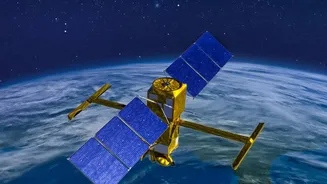
On September 4, 2026, ISRO's powerful GSLV-F17 rocket lifted off from Sriharikota, carrying a crucial national asset: the Earth Observation Satellite-05, or EOS-05. Weighing approximately 2,367 kg, it is one of the heaviest payloads launched by a GSLV,
representing a significant mission for India's space program. The initial launch successfully placed the satellite into a sub-geosynchronous transfer orbit, but this was just the beginning of its complex journey. The ultimate goal was to place this state-of-the-art satellite into a very specific and powerful position nearly 36,000 kilometres above the Earth, a feat that required patience and precision. The successful launch was a critical first step, setting the stage for a series of complex manoeuvres that would define the mission's outcome.
The Final Push to Position
The "latest evidence" surrounding EOS-05 is the confirmation of its successful journey to its final orbital home. Following the launch, ISRO engineers executed a series of meticulously planned orbit-raising manoeuvres. Using the satellite's own onboard Liquid Apogee Motor (LAM), they fired the engine in stages to gradually push EOS-05 higher. The first burns began on September 5, with subsequent firings on the following days. The final and most crucial manoeuvre took place on the evening of September 7, when a prolonged engine burn pushed the satellite into its intended near-circular geosynchronous orbit. ISRO confirmed that the satellite was healthy and had settled into an orbit ranging from about 34,903 km to 35,884 km. This successful orbital insertion is the definitive evidence that EOS-05 is now ready for the next phase of its operational life.
Why A Geosynchronous Orbit Matters
What makes EOS-05 so special is its orbital position. Most Earth observation satellites are in Low-Earth Orbit (LEO), circling the globe rapidly and only getting brief snapshots of any given area as they pass overhead. EOS-05, however, is in a geosynchronous orbit. This means its orbital period matches Earth's rotation. From our perspective, the satellite appears to remain stationary over the Indian subcontinent, like an unblinking eye in the sky. This 'fixed' position is a game-changer. Instead of waiting for a satellite to pass over a location of interest, EOS-05 can provide continuous or near-continuous monitoring of the entire Indian landmass and surrounding waters. This persistence allows for a level of observation that India has never had from a single imaging satellite before.
A Leap for Safety and Security
The practical applications of this constant vigilance are immense. For disaster management, EOS-05 offers an unprecedented ability to track the development of cyclones, monitor flooding in near real-time, and detect forest fires as they start. The satellite is designed to image the entire country roughly every 30 minutes, with the capability to revisit priority targets in as little as five minutes. This rapid refresh rate can provide critical information to first responders and save lives. Beyond natural disasters, the satellite enhances agricultural planning by monitoring crop health and vegetation. Furthermore, its capabilities provide a significant strategic advantage, enabling continuous surveillance of India's borders and maritime areas, bolstering national security.
The Technology Behind the Vision
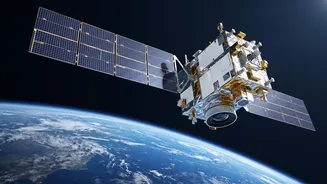
EOS-05 is equipped with advanced imaging payloads capable of seeing in multiple light spectrums, including visible, near-infrared, and short-wave infrared bands. This multispectral and hyperspectral capability means the satellite can gather highly detailed information that isn't visible to the naked eye, allowing scientists and analysts to assess everything from water quality to soil conditions. The successful deployment of EOS-05 not only represents a comeback for the GSLV program but also demonstrates ISRO's growing mastery of complex space technologies. Once its systems are fully checked out and its imagers are activated, India will begin receiving a steady stream of data from its powerful new sentinel in the sky.