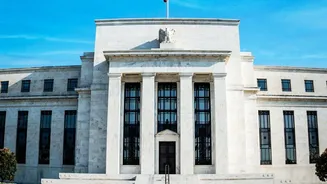




Understanding the RBI's Holding Pattern
On August 5, 2026, the RBI's Monetary Policy Committee (MPC) unanimously voted to maintain the repo rate at 5.25% for the fourth consecutive time. The repo rate is the interest rate at which the central bank lends money to commercial banks. It's the RBI's primary
tool for managing inflation and liquidity in the economy. A high rate makes borrowing expensive, curbing spending, while a low rate encourages it. The decision to hold the rate steady signals a 'wait-and-watch' approach. The RBI is balancing its goal of supporting India's resilient economic growth—with the GDP forecast for FY27 revised up to 6.7%—against persistent uncertainties like global geopolitical tensions and volatile food and fuel prices.
Decoding the Lending Spread
While the repo rate gets the headlines, the 'lending spread' is where the bank's strategy directly impacts your wallet. Simply put, a lending spread is the difference between the interest rate a bank charges on a loan and its own cost of funds. Think of it as the bank's profit margin. This spread covers the bank's operational costs, accounts for the risk of the borrower defaulting, and generates profit. This is a crucial component of a bank’s Net Interest Margin (NIM), a key indicator of its profitability. Your final loan rate is not just the repo rate; it's the bank's cost of funds plus this spread.
How a Rate Hold Changes the Game
When the RBI is actively hiking or cutting rates, banks can often point to these policy changes to justify their own lending rate adjustments. A rising repo rate provides a clear reason for increasing loan EMIs. However, a prolonged pause, like the current one, removes this external justification. With their main borrowing cost from the RBI now stable, the focus shifts squarely onto the banks themselves. The decision to raise or lower a loan rate becomes a more direct reflection of a bank's own business strategy, its assessment of credit risk, and its desired profit margin. The case for the spread is no longer about reacting to the RBI, but about the bank's own internal metrics and market positioning.
The Pressure on Bank Margins
This stability doesn't necessarily mean banks are in an easy position. Many are still processing the impact of previous rate cuts, where lending rates fell faster than their costs on long-term deposits. This has put pressure on their Net Interest Margins (NIMs). With the repo rate now steady, banks can't rely on policy tailwinds to boost profitability. Instead, they must manage their spreads carefully. They face a delicate balancing act: keeping loan rates attractive enough to compete for high-quality borrowers while maintaining a spread that ensures their own financial health. The competition for both loans and low-cost deposits is likely to intensify.
What This Means For Borrowers
For anyone with or seeking a loan, a stable repo rate is good news, as it reduces the likelihood of sudden, sharp increases in EMIs linked to external benchmarks. However, it doesn't guarantee that loan rates will stay flat or fall. Banks might still adjust their spreads based on their perception of risk in the economy or their own funding pressures. Some banks might offer finer spreads to attract customers with excellent credit scores, while others might keep them wide to protect their profit margins. The key takeaway for borrowers is that the market is now more fragmented. The 'one-size-fits-all' impact of an RBI rate move is gone, replaced by a lender-specific approach to pricing.