




A Cosmic Triptych
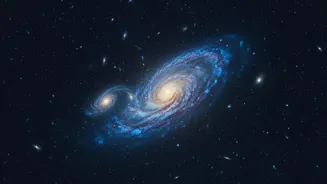
The image, featured as NASA's Astronomy Picture of the Day, presents a trio of galactic pairings, all captured in the same frame yet each telling a unique tale of gravitational drama. Unlike a single subject, this composition allows for a comparative
look at the different ways galaxies interact across the vastness of space. Sourced from the Centaurus Galaxy Cluster, the image provides a lesson in cosmic dynamics, demonstrating that in the universe, not all encounters are created equal. It's a visual journey through time and possibility, showcasing what happens when these colossal islands of stars meet.
The Ghost of a Collision Past
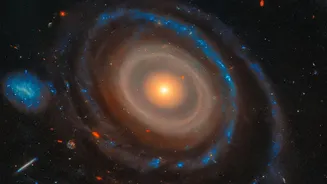
The top pair in the image immediately presents a puzzle. While the two galaxies appear close, they are likely not interacting at present. However, one of them, a galaxy known as NGC 4650A, displays a rare and beautiful feature: a polar ring. This is a ring of gas, dust, and stars that orbits the galaxy's core at a right angle to its main disc, like a wheel spinning perpendicular to a carousel. Astronomers believe such structures are the tell-tale signs of a past collision. They are essentially the galactic wreckage from a smaller galaxy that was torn apart and absorbed hundreds of millions of years ago. This pair, therefore, shows us the long-term aftermath of a violent cosmic merger.
A Case of Mistaken Identity
Moving to the middle pair, we see two galaxies that look like they are beginning to feel each other's gravitational pull. The larger of the two, NGC 4650, is a stunning spiral galaxy with a bright bar of stars across its center. At first glance, it appears to be on a collision course with its smaller neighbour. However, astronomy often involves looking beyond appearances. Scientists have measured the relative speeds of these two galaxies and concluded that an interaction is unlikely. They are probably just a line-of-sight coincidence—two objects that appear close together from our vantage point on Earth but are, in reality, separated by a vast distance. It’s a crucial reminder that the universe can play tricks on the eye.
The Dance of Destiny
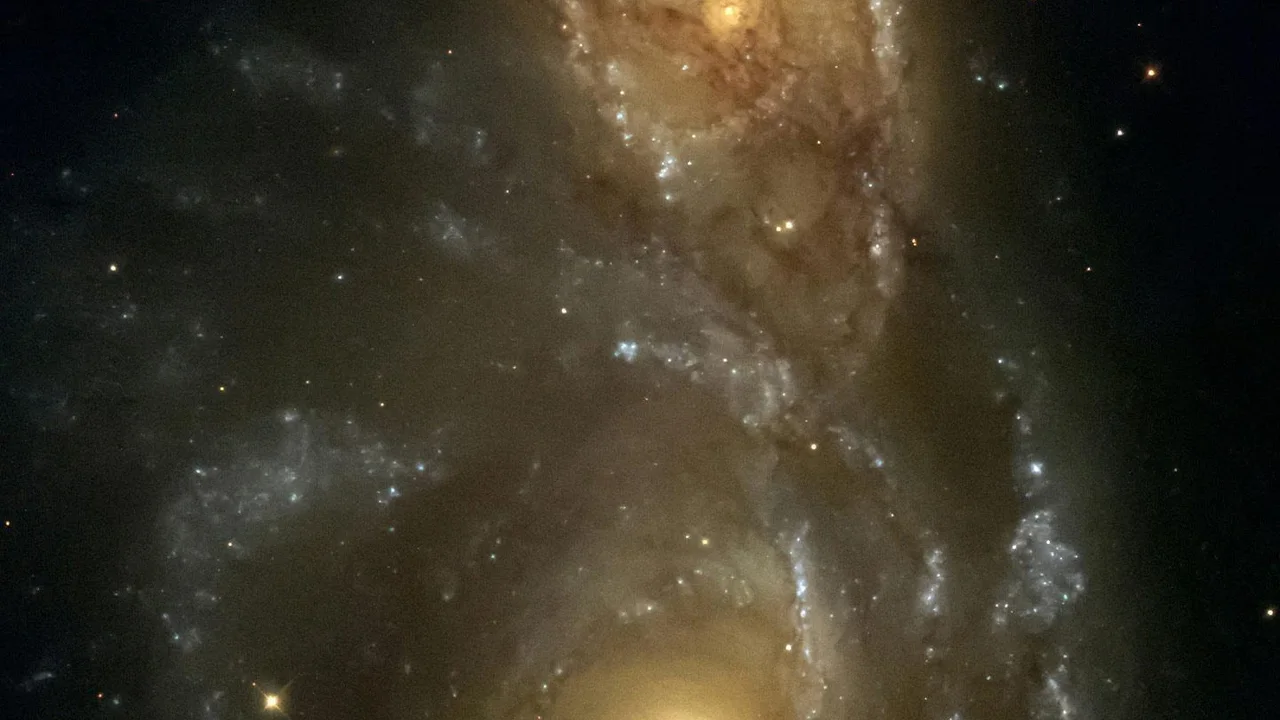
The final pair, at the bottom of the image, shows the real action. Here, two galaxies, NGC 4622A and NGC 4622B, are actively engaged in a gravitational tug-of-war. This is a classic galaxy interaction in progress. When galaxies get this close, their immense gravity distorts their shapes, pulling out long streams of stars and gas called tidal tails. The space between stars is so vast that individual suns rarely, if ever, collide. Instead, the galaxies pass through each other, with their gas clouds crashing together to ignite furious bursts of new star formation. For these two, their fate is sealed. Over the next billion years or so, they will continue to dance around each other, eventually merging to become one single, larger galaxy.
A Universal Story
This captivating image does more than showcase a few isolated events; it illustrates a fundamental process in the cosmos. Galaxy mergers are a key driver of cosmic evolution, helping to build larger, more massive galaxies over billions of years. These interactions can transform spiral galaxies into the more rounded elliptical types and can trigger the activity of the supermassive black holes that lurk at their centers. This process is not just something that happens far away; it's part of our own future. Scientists predict that our own Milky Way galaxy is on a collision course with the neighbouring Andromeda galaxy, with a merger expected in about 4.5 billion years. The result will be a new, giant elliptical galaxy.