





The Challenge of a Fleeting Season
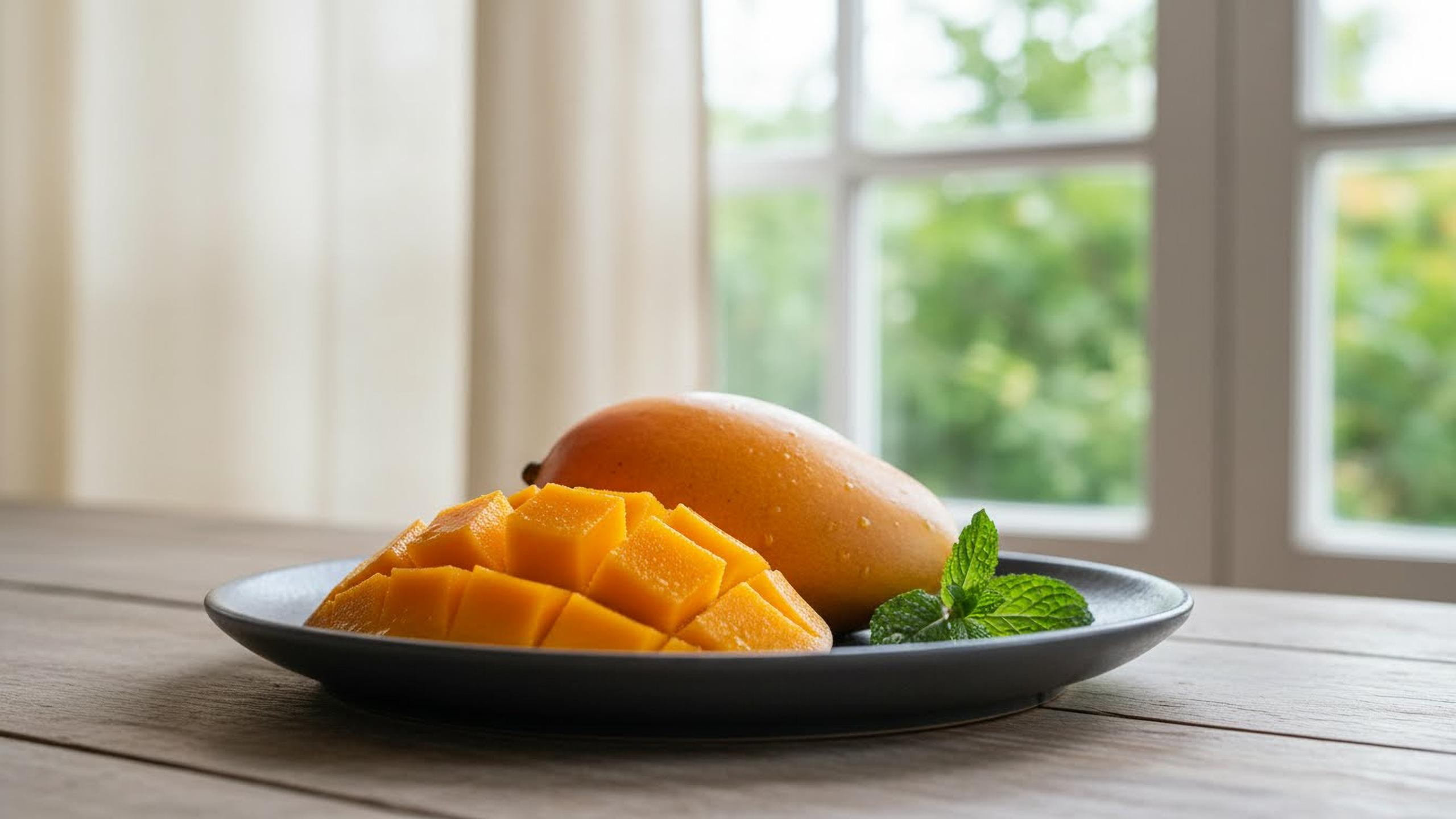
The Indian mango season has a traditional rhythm, beginning in March and peaking from April to June with celebrated varieties like Alphonso and Kesar. However, as the monsoon rains arrive in early June, the season for these premium mangoes abruptly ends,
as the moisture can ruin the fruit's shelf life. This short window has historically limited the export potential, especially for reaching far-flung markets in Europe and North America where sea freight is too slow for such a perishable and sensitive fruit. The result is a compressed, high-stakes period for farmers and exporters trying to meet massive global demand in just a few months.
A New Lifeline in the Sky
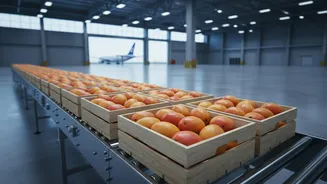
Air freight is the game-changer. While more expensive than sea transport, it slashes transit times from weeks to mere days, which is essential for a fruit with a short shelf life. This speed allows highly perishable but prized mangoes to arrive in markets like the US, UK, and Middle East in near-perfect condition. Airlines have developed sophisticated cold-chain logistics, using refrigerated trucks and temperature-controlled storage at airports to maintain the fruit's quality from farm to final destination. This logistical prowess means that the authentic taste of an Indian mango can be enjoyed thousands of miles away, often just days after being picked.
The Stars of the Late Season
The extension of the export season is made possible by mango varieties that are harvested later in the year. While Alphonso and Kesar dominate the early season, varieties from North and South India keep the supply going. Northern varieties like the exceptionally sweet and juicy Chaunsa, along with Langra and Dasheri, are harvested from July into August. Recently, late-season varieties from Karnataka, such as Neelam and Totapuri, have also entered the export scene. Harvested from late June through July, these mangoes provide a crucial bridge, allowing India to cater to international demand well beyond the traditional peak period.
Tapping into Global Demand
Global appetite for Indian mangoes is strong and growing. The United States, the United Arab Emirates, the United Kingdom, and various European and Southeast Asian nations are all major markets. In 2026, demand in the US alone is projected to grow by around 7%. This demand is driven by both the large Indian diaspora and a growing appreciation for the unique flavor profiles of Indian mangoes among international consumers. Facilitated by organizations like the Agricultural and Processed Food Products Export Development Authority (APEDA), new air shipment routes are being established, such as a recent first-ever consignment of Neelam and Totapuri mangoes from Karnataka to the Maldives.
The Cost-Benefit Equation
The primary drawback of air freight is its cost, which has seen significant surges. Recent reports in 2026 noted freight rates from India to the US increasing to around ₹500-₹550 per kilogram, up from about ₹350 the previous year. This makes mango exports highly price-sensitive, and exporters must balance these high logistical costs against the prices consumers are willing to pay. However, the benefits are compelling. Direct market access via air freight can yield significantly higher returns for farmers—in some cases, over 50% more than domestic channels. By connecting Farmer Producer Companies directly with global markets, this model not only extends the season but also creates a more profitable and sustainable income stream for growers.