
An Overview of the Project
The Mumbai-Ahmedabad High-Speed Rail (MAHSR) project is a landmark undertaking to connect India's financial capital, Mumbai, with the economic hub of Ahmedabad. Spanning a 508-kilometre route through Maharashtra, Gujarat, and Dadra and Nagar Haveli, the corridor
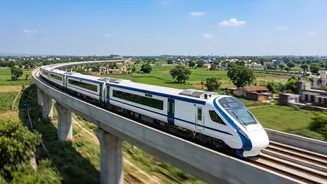
is designed to accommodate trains running at a speed of 320 kmph. This will dramatically cut travel time between the two cities. The project, managed by the National High Speed Rail Corporation Limited (NHSRCL), involves constructing 12 stations, elevated viaducts, bridges, and a complex undersea tunnel. It is being developed with technical assistance from Japan, utilising its renowned Shinkansen technology.
Current Construction Status
After earlier delays, particularly with land acquisition, construction is now advancing at a rapid pace across the corridor. According to recent statements from Union Railway Minister Ashwini Vaishnaw, the project is progressing faster than anticipated. A major milestone is the expected completion of civil construction on the Vapi-Surat section by December 2026. Work on stations, viaducts, and river bridges is moving swiftly, especially in the Gujarat portion of the route. In Maharashtra, foundation and column work for stations like Virar and Thane is also steadily progressing.
The 'Make in India' Push
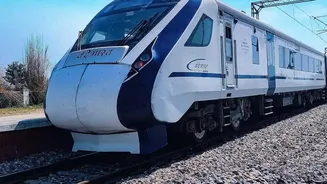
A significant recent development is the push towards indigenous manufacturing for the bullet train itself. The first body frame of a 'Made-in-India' bullet train has been completed and sent for critical squeeze testing. This marks a major step towards self-reliance under the Atmanirbhar Bharat initiative. This Indian-made trainset is being designed to operate at speeds of up to 280 kmph. While initial plans involved reliance on Japanese rolling stock, the government is now focused on developing domestic capabilities. BEML Limited is manufacturing prototype trainsets at a dedicated facility in Bengaluru, with the first prototype expected to be ready for trials by May or June 2027.
Revised Timelines and First Run
The most anticipated question is when the first bullet train will become operational. According to the Railway Minister, the first section of the corridor is set for commissioning in 2027. The initial run is planned for the Surat-Bilimora section in Gujarat. Following successful testing of the indigenously manufactured trainsets, the first commercial service is expected to be inaugurated in August 2027. While the full 508-km corridor will be completed in later phases, the launch of the first section will mark India's official entry into the high-speed rail era.
Challenges and Future Outlook
Despite the accelerated pace, challenges remain. The project is a massive undertaking with huge upfront capital costs and complex engineering, including an undersea tunnel near Mumbai. Ensuring seamless integration between different systems, such as track, signalling, and rolling stock, is critical. However, the MAHSR project is seen as more than just a single route; it's a template for future expansion. The government has already identified seven other potential high-speed corridors. The experience and industrial ecosystem being developed through the Mumbai-Ahmedabad line are intended to make future projects faster and more cost-effective, paving the way for a national high-speed rail network.