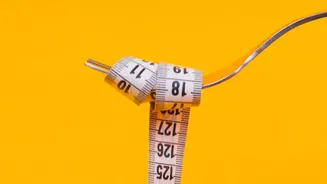









Dieting's 'Feminine' Frame
For decades, the diet industry has overwhelmingly targeted women. Advertising has been dominated by imagery and language focused on achieving slenderness and fitting into smaller clothes. This has created a powerful, lasting association between dieting
and femininity. As a result, concepts like calorie counting, portion control, and group-based weight loss programs are often perceived as 'feminine' activities. Research shows that men can be more resistant to things perceived as feminine, fearing it could challenge their manhood in the eyes of others. This social conditioning means that for many men, openly starting a diet can feel like stepping into a space that wasn't designed for them, leading to discomfort and avoidance.
Masculinity and the Fear of Weakness
Traditional masculine ideals often revolve around strength, self-reliance, and emotional stoicism. Within this framework, admitting a need for help or showing vulnerability can be seen as a sign of weakness. Dieting, by its nature, involves acknowledging a problem and seeking a solution, which can conflict with these ingrained ideals. Furthermore, the physical pressure on men is often different; while women are pressured to be smaller, men are often expected to be muscular and large. This can lead to a focus on 'bulking up' rather than slimming down. The struggle is often silent, as men may feel pressure to appear confident even when experiencing body dissatisfaction and the weight stigma that affects up to 40% of them.
An All-or-Nothing Mindset
When men do decide to address their weight, they often gravitate towards more extreme, 'all-or-nothing' approaches rather than gradual lifestyle changes. They may prefer intense workout regimens and restrictive eating plans over more moderate, sustainable strategies. Marketing often reinforces this, selling 'fitness' and 'performance' over 'dieting'. This can be driven by a desire for quick, tangible results and a competitive mindset, which studies suggest appeals more to men. However, this intensity is often difficult to maintain long-term, leading to burnout and a cycle of gaining and losing weight. The preference for exercise over dietary changes is also common, as physical activity is more aligned with traditional masculine pursuits.
How the Narrative is Changing
The wellness industry is slowly starting to recognise these gendered barriers. To better appeal to men, there's a growing trend of rebranding weight loss. Instead of 'diets', companies use terms like 'nutritional optimisation', 'health protocols', or 'performance plans'. The focus is shifting from aesthetics to function—improving energy, building strength, or even enhancing job performance, which are motivators more aligned with male consumers. Gamified apps and programs that emphasise exercise are also proving more effective at engaging men. By changing the language and framing the goals around strength, health, and performance rather than simply weight loss, these new approaches are making wellness more accessible and appealing to a male audience that has long been underserved.