





The Great Coriander Debate
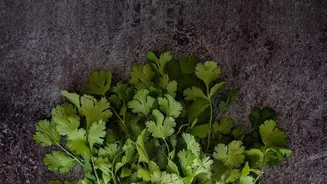
Few herbs provoke such strong reactions as coriander. It’s a staple in many cuisines, from Mexican and Thai to Indian and Middle Eastern, celebrated for its bright, complex flavour. Yet for a significant portion of the population, its taste is anything
but pleasant. This group reports a jarring, soapy, or even metallic flavour that can ruin an entire dish. This isn't a matter of simple preference, like choosing between tea and coffee. The divide is so stark because the two groups are having genuinely different sensory experiences, and the reason is written in our genetic code.
It’s In Your DNA
The primary reason for the soapy sensation is a variation in a cluster of olfactory receptor genes. Scientific studies, including a large one by the genetics company 23andMe, identified a specific gene called OR6A2 as a key player. This gene is responsible for detecting certain smells. People who have a particular variant of the OR6A2 gene are highly sensitive to the aldehyde chemicals found in coriander. Since your sense of smell is deeply linked to how you perceive flavour, your brain interprets these aldehydes as 'soapy' because similar chemical compounds are found in products like soaps, detergents, and lotions. It’s not your imagination; your nose is literally telling your brain you’re eating soap.
A Global Taste Phenomenon
Interestingly, the prevalence of this genetic trait varies significantly across different ethnic groups. The aversion is most common among people of East Asian (up to 21%), European (around 17%), and African (about 14%) descent. Conversely, in regions where coriander is a culinary cornerstone, the percentage of people who dislike it is much lower. For instance, only about 7% of South Asians, 4% of Hispanics, and 3% of people with Middle Eastern ancestry report a dislike for the herb. This suggests that over centuries, cultural exposure may play a role. Where the ingredient is ubiquitous, populations may have a lower frequency of the genetic variant that causes the soapy taste.
Can You Learn to Like It?
So, if you’re cursed with the 'soap gene', are you destined to pick coriander out of your food forever? Not necessarily. While you can't change your DNA, some people report that their perception of coriander has changed over time with repeated exposure. The brain can sometimes learn to re-associate a flavour, especially if it’s introduced in small amounts or in different forms. One trick is to crush or bruise the leaves before using them, as this helps break down the offending aldehyde compounds. Cooking the herb, rather than eating it raw, can also mellow the flavour. Blending it into sauces like chutney or pesto, where other powerful flavours are present, can also make it more palatable for those who are sensitive.