
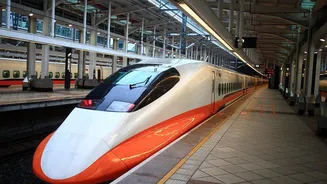


The Core Project: A High-Speed Vision
India's first high-speed rail initiative is the Mumbai-Ahmedabad High-Speed Rail (MAHSR) corridor. This ambitious project spans 508 kilometres, connecting Maharashtra's financial capital with Gujarat's largest city. The line features 12 stations: Mumbai (BKC),
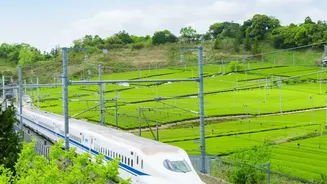
Thane, Virar, Boisar, Vapi, Bilimora, Surat, Bharuch, Vadodara, Anand, Ahmedabad, and Sabarmati. Developed by the National High-Speed Rail Corporation Ltd (NHSRCL) with Japanese Shinkansen technology, the trains are designed to operate at speeds up to 320 kmph. This is expected to slash travel time between the two economic hubs to just under two hours for the fastest services, a dramatic reduction from the current 6-7 hours by conventional rail.
What's New: The Latest Progress Report
Recent updates from Railway Minister Ashwini Vaishnaw in September 2026 have brought fresh clarity. A significant new development is the completion of the first coach body frame, which has been sent for crucial 'squeeze testing'. This marks a major step in the 'Atmanirbhar Bharat' vision for developing indigenous high-speed rail manufacturing capabilities. On the construction front, work is advancing rapidly. The Vapi-Surat section of civil construction is targeted for completion by December 2026. This progress on the ground, coupled with the manufacturing milestone, signals that the project is moving from blueprints and foundational work to tangible, visible components.
The All-Important Timeline
The most significant new details concern the operational timeline. According to the Railway Minister, the first bullet train is expected to begin testing on the tracks by May or June 2027. This testing phase is anticipated to last between two and four months. Following successful trials, the inaugural commercial service is targeted for August 2027, with some sources suggesting a potential launch by the end of 2027. The rollout will be phased. The first section slated to become operational is the stretch between Surat and Bilimora in Gujarat. This phased approach allows the NHSRCL to begin services on completed sections while work continues on the rest of the 508-km corridor. The entire line is projected to be fully operational by 2029.
The Indigenous Angle
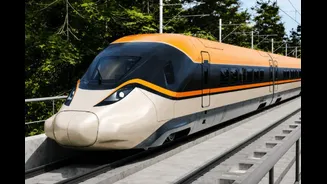
While the project began with significant Japanese technological collaboration, a key part of the new story is the push for domestic manufacturing. The B-28 trainset, capable of speeds up to 280 kmph, is a 'Make in India' initiative being jointly designed and manufactured by the Integral Coach Factory (ICF) and Bharat Earth Movers Limited (BEML). This move is intended to build an ecosystem for high-speed rail manufacturing within India, reducing reliance on imports for future projects. The first prototype from this effort is expected to be ready for its extensive testing by early 2027, aligning with the recently announced testing timeline.
What Will a Ticket Cost?
While an official fare structure has not been finalised, estimates provide a strong indication of the price point. Reports suggest the end-to-end fare between Mumbai and Ahmedabad will be around ₹3,000. This positions the bullet train as a premium service, priced higher than a First AC ticket on conventional trains but competitive with airline fares, especially when factoring in the time saved travelling to and from airports. The proposal also includes a minimum fare of around ₹250 for shorter journeys between intermediate stations. One unique, India-specific modification is that train coaches will have dedicated space for check-in luggage, an adaptation from the standard Japanese Shinkansen design to accommodate local travel habits.
Beyond Mumbai-Ahmedabad
The MAHSR is not just a standalone project; it's the template for a national network. The experience and standards developed are set to be replicated across the country. The government has already announced seven more high-speed rail corridors, including routes like Delhi-Varanasi, Chennai-Bengaluru, and Mumbai-Pune-Hyderabad. The successful implementation of the Mumbai-Ahmedabad line, from construction techniques to operational management and indigenous manufacturing, is laying the foundation for a nationwide high-speed rail grid that aims to transform inter-city travel in the coming decades.