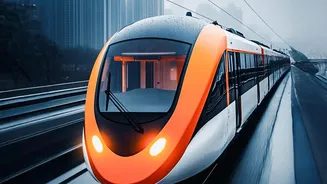






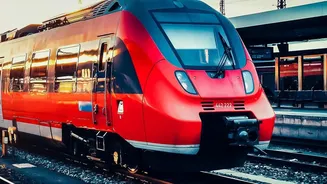
What Exactly Is an LNG-Powered Train?
This isn't a train that runs purely on gas. Instead, it uses a dual-fuel system. Engineers have retrofitted the existing diesel engines in two 1,400-horsepower Driving Power Cars (DPCs) to run on a blend of diesel and LNG. The system is designed to substitute
about 40% of the diesel with LNG, which is natural gas cooled to a liquid state. This allows the train to retain the power and reliability of a diesel engine while gaining some of the benefits of a cleaner fuel. The train can also switch back to running entirely on diesel if LNG isn't available, providing operational flexibility. Before its official launch, the technology underwent over 2,000 kilometres of field trials to ensure its reliability and safety.
The Push for Cleaner Fuel
For decades, diesel has been the workhorse of Indian Railways, but it comes with significant costs, both financial and environmental. The push to find alternatives is part of a larger national strategy to reduce dependence on imported fossil fuels, cut operational expenses, and combat air pollution. Indian Railways has an ambitious goal to become a net-zero carbon emitter and reduce its diesel consumption to zero by 2030. The primary strategy to achieve this has been rapid electrification, with nearly all of the broad-gauge network now capable of running electric trains. However, electrifying every single route, especially in remote or low-traffic areas, can be financially and logistically challenging. This is where alternative fuels like LNG and hydrogen come in, serving as a bridge technology for routes that are not yet electrified.
Gains: Lower Costs and Fewer Emissions
The immediate benefits of this LNG trial are twofold: cost savings and a smaller carbon footprint. According to initial estimates from Indian Railways, using the LNG-diesel blend could save around ₹11.9 lakh per Driving Power Car annually. For an eight-coach train, this could amount to savings of about ₹23.9 lakh per year. Environmentally, LNG burns cleaner than diesel. While it is still a fossil fuel and produces carbon dioxide, it significantly reduces emissions of harmful pollutants like nitrogen oxides (NOx) and particulate matter. This contributes to cleaner air quality along rail corridors and helps the national transporter move closer to its environmental goals.
Why This Is Just a Trial For Now
Despite its promise, a widespread shift to LNG-powered trains across India's vast network is not imminent. The current project is a pilot to test the technology's feasibility, safety, and economic viability in real-world conditions. Several challenges remain. One major hurdle is infrastructure; a nationwide network of cryogenic storage and refuelling stations would need to be built to support a large fleet of LNG trains. While the dual-fuel system provides flexibility, scaling it up would require significant investment in retrofitting existing diesel locomotives. Safety is also a paramount concern, and though the LNG tanks are built to stringent standards, handling a cryogenic fuel at -162°C requires specialised procedures and training. This trial on the Sabarmati-Mahesana route will provide crucial data to determine if these challenges can be overcome at scale.