




The Story We Thought We Knew
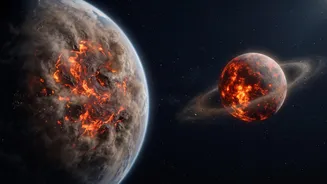
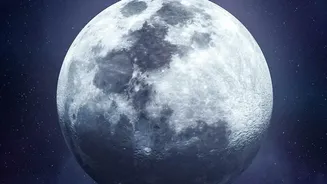
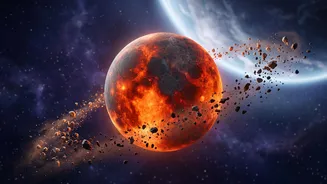
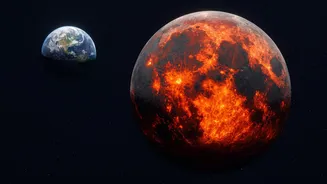
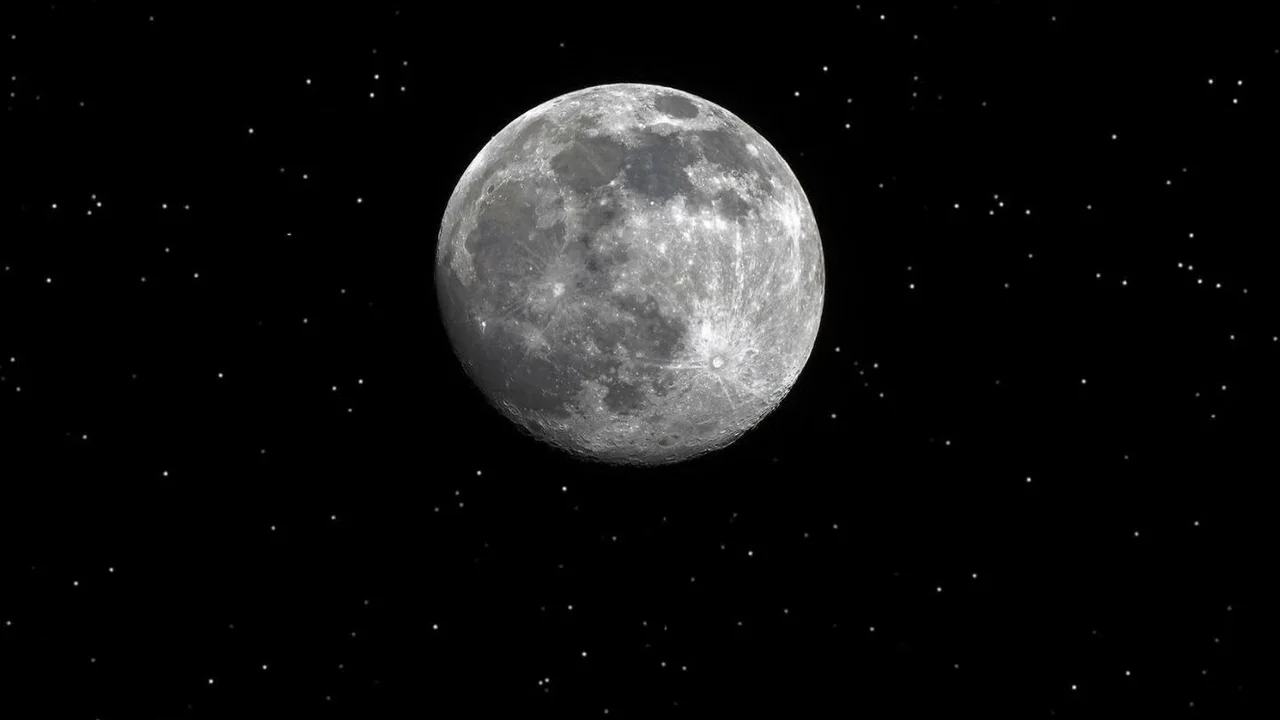
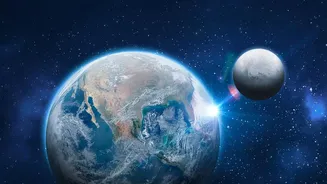
For the last few decades, the leading theory for the Moon's creation has been the 'Giant-Impact Hypothesis'. The story goes like this: about 4.5 billion years ago, when our solar system was still a chaotic construction zone, a planet roughly the size
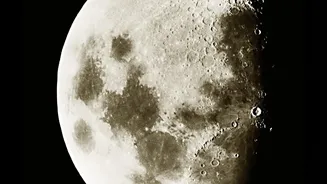
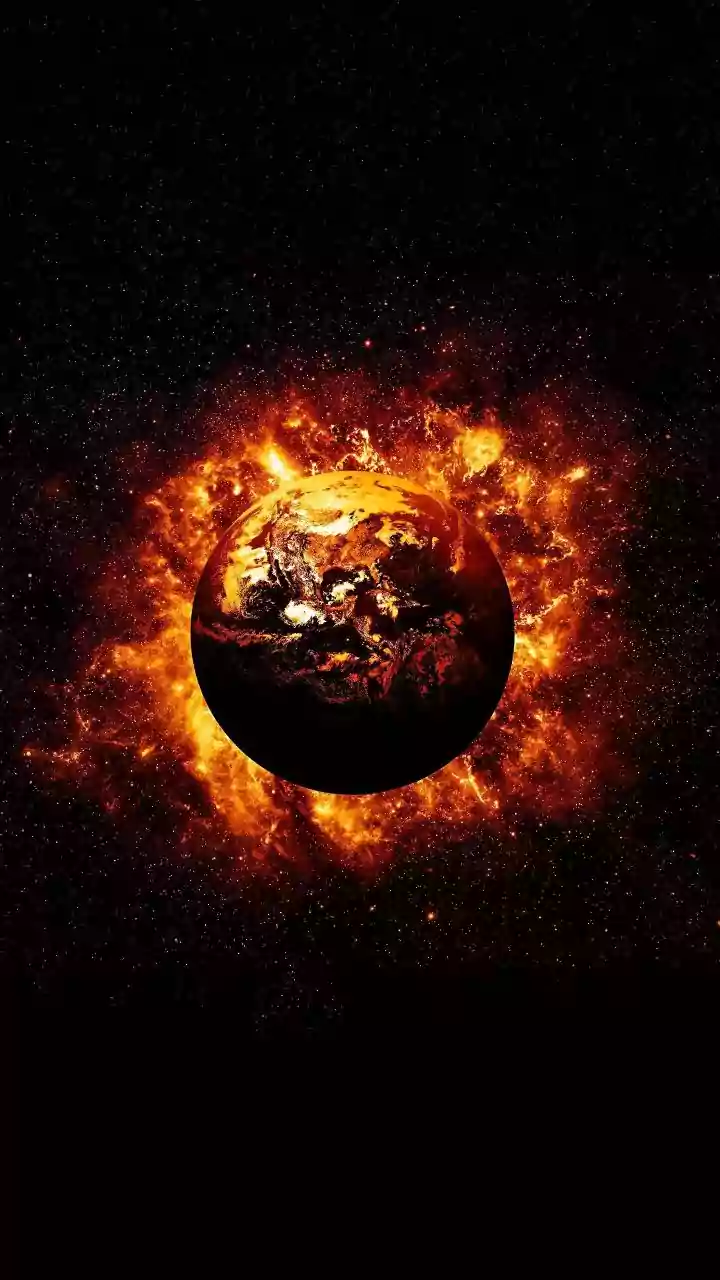
of Mars slammed into the young Earth. Scientists even gave this wandering planet a name: Theia. The collision was so cataclysmic that it blasted a huge amount of molten rock and debris into space. This material then formed a ring around Earth, and over thousands or even millions of years, gravity slowly pulled this debris together to form the Moon. This narrative, known as the canonical impact model, elegantly explained many of the Moon's key features, such as its size, orbit, and why it has a much smaller iron core than Earth.
A Lingering Cosmic Puzzle
Despite its success, the Giant-Impact Hypothesis had a major problem that vexed scientists: the 'isotopic crisis'. Isotopes are like a material's chemical fingerprint, telling us where it came from. When scientists analysed the lunar rocks brought back by the Apollo missions, they found a startling similarity. The Moon’s isotopic fingerprint is nearly identical to Earth’s. This was a huge puzzle. If the Moon was mostly made from the debris of Theia, as the original models suggested, it should have a different chemical signature from Earth. It would be like two cars crashing and finding that the resulting wreckage is made almost entirely from the parts of just one car. This suggested something was missing from our understanding of this ancient collision.
The Missing Ingredient: Heat
Recent simulations from researchers at the Southwest Research Institute and the University of Arizona have introduced a crucial new variable that previous models largely ignored: temperature. Earlier simulations treated the colliding planets as simple fluids, assuming the sheer energy of the impact would make their material strength irrelevant. The new research, however, factors in that these were geological bodies with rock and metal that behave differently depending on how hot they are. Hotter rock is weaker and more deformable than colder, stronger rock. When researchers ran the simulations with a hotter, and therefore weaker, Theia, the outcome was dramatically different. Instead of creating a debris disk, the impact could create a large, intact Moon-sized body and fling it directly into orbit within a matter of hours.
What This Means in Practice
This discovery has several profound implications. First, it completely changes the potential timeline. The Moon might not have been a slow-burn creation over millennia; it could have been born in an afternoon, forming in as little as five hours. Second, it links the how of the Moon’s formation to the when. Since planets were hotter earlier in the solar system's history, a rapid, intact formation suggests the impact happened very early on. A slower formation from a debris disk would point to a later collision, when Theia would have been cooler and stronger. Finally, it forces a rethink of how we model planetary collisions across the universe, proving that the physical properties and temperature of colliding worlds play a decisive role in the outcome. While this new model doesn't single-handedly solve the isotopic mystery, it provides a brand new framework for exploring the most dramatic event in Earth's history.