




A Tale of Two Dishes
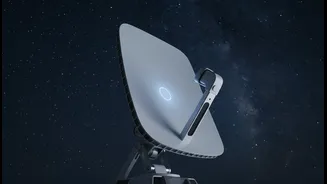
When comparing Starlink’s consumer hardware, it’s helpful to know the players. The V4, often known as the 'Standard Actuated' dish, is the established workhorse that debuted in late 2023. It features internal motors that automatically align the dish for
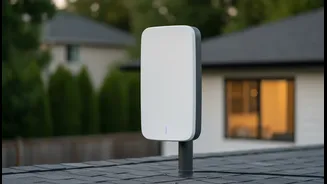
the best signal. The new V5, officially just called the 'Standard' model, is its successor, first appearing in select US markets in mid-2026. It does away with the motors in favour of a lighter, more streamlined design that requires manual positioning during setup. While the V4 has been the go-to for many residential users, the V5 represents a significant shift in design philosophy, prioritizing efficiency and portability over raw power and automation. This makes the choice between them less about which is 'better' and more about what kind of user you are.
The Question of Speed
On paper, the headline holds true: the V4 has a slight edge in speed. Starlink's official specifications rate the V4 with a peak download capability of over 400 Mbps, while the V5 is listed at a slightly lower 375+ Mbps. However, this 25 Mbps difference in the theoretical maximum is unlikely to be noticeable in daily use. Real-world internet speeds are influenced by a host of other factors, including your service plan, network congestion in your area, and whether the dish has a clear, unobstructed view of the sky. For typical activities like streaming, gaming, and video conferencing, both dishes are more than capable of delivering a seamless experience. The key takeaway is that while the V4 technically has a higher speed ceiling, the practical performance difference for the average user is minimal.
A Huge Leap in Energy Efficiency
The most significant advantage of the Starlink V5 is its dramatically lower power consumption. The V4 dish typically draws an average of 75 to 100 watts. In contrast, the new V5 cuts that demand by about half, averaging just 35 to 50 watts. This isn't just a minor tweak; it's a game-changing improvement for a huge segment of users. For a standard home, this translates to lower electricity bills. But for anyone running their system off-grid, on a boat, in an RV, or with a home battery backup system like a Tesla Powerwall, this reduction is revolutionary. A 50% drop in power draw fundamentally changes the math for battery sizing and solar array requirements, making it far more practical to run Starlink 24/7 in remote or mobile setups.
Design, Weight, and Practicality
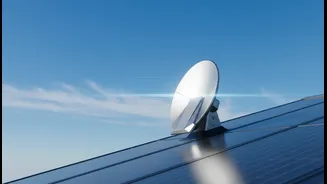
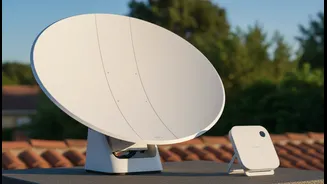
Beyond power, the V5 is a complete physical redesign. It is significantly smaller and lighter, weighing in at just 1.1 kg (2.4 lbs) compared to the V4's 2.9 kg (6.4 lbs). This makes the V5 far easier and safer for one person to carry up a ladder and install on a roof. The V5 kit also comes bundled with a pipe adapter, simplifying mounting. There is one trade-off to consider: the V5 kit typically includes the smaller 'Router Mini', which may have less Wi-Fi range than the more capable 'Router 3' that often came with the V4. This might mean larger homes could require a mesh network setup to achieve the same indoor coverage. It's also important to note that, like its predecessor, the V5 is not intended for use while in motion.
The Verdict: Who Should Choose the V5?
The choice between the Starlink V4 and V5 comes down to your priorities. If you are a residential user with stable grid power and already own a V4, there is no urgent need to upgrade. The minimal speed difference won't change your experience. However, for new customers, the V5 is the clear winner in most scenarios. Its massive improvement in energy efficiency makes it the default choice for anyone conscious of power use, especially those in the RV, marine, or off-grid communities. The lighter weight and smaller size also make it a more practical and user-friendly option for installation anywhere. The V5 represents the future of Starlink's consumer hardware: a smarter, more efficient, and more adaptable solution for connecting the world, trading a negligible amount of peak speed for major gains in everyday usability.