






The Art of Finding Stillness
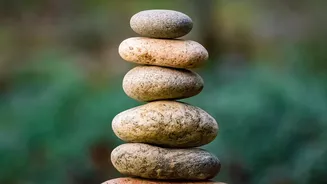
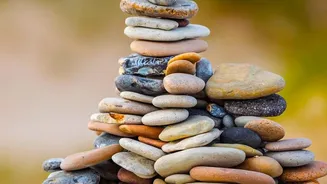
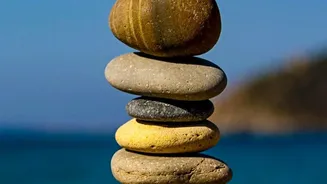
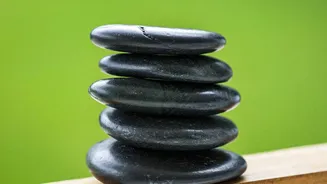
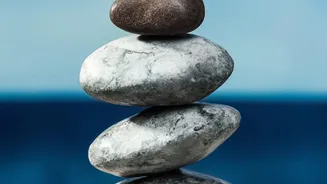
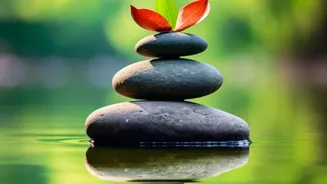
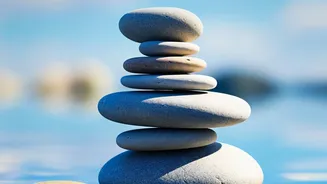
At its core, stone balancing is the practice of stacking rocks in harmony with gravity, without the use of any adhesives or supports. Each sculpture exists in a state of delicate equilibrium, a testament to patience and a steady hand. Practitioners describe
it as a meditative activity where the mind must become quiet and intensely present. To find the precise point of balance—often on an impossibly small fulcrum—one must tune out distractions and focus entirely on the feel of the stones and the subtle shifts in their weight. This deep concentration is what draws many to the practice; it’s a form of active mindfulness that demands you be fully in the moment.
Focus, Coordination, and a Calmer Mind
The primary benefits of stone balancing are directly linked to the process itself. The act requires and therefore cultivates intense concentration, improving your ability to focus on a single task. This translates well beyond the riverbank, enhancing mental clarity in daily life. It’s also an exercise in fine motor skills and hand-eye coordination. You learn to make minute, deliberate adjustments, feeling for the point of stability rather than just seeing it. Many who practice stone balancing report a significant reduction in stress. The repetitive, gentle nature of the activity, often performed outdoors, helps to calm an anxious mind. It’s a process of trial and error, where a collapsed tower is not a failure but an invitation to try again, building resilience and patience.
Why Modesty in Wellness Matters
The wellness industry often promotes trends with grandiose promises of life-altering transformation. Stone balancing, however, finds its true power in its modesty. While some proponents may make sweeping claims about curing anxiety or depression, the most experienced practitioners emphasize the simple, grounding nature of the art. The point isn't to achieve a mystical state of enlightenment but to engage in a process that quiets the mind. Overstating the benefits risks turning a pure, process-oriented activity into another goal-driven disappointment. It shifts the focus from the internal experience—the feeling of calm and concentration—to an external, and often fleeting, result. Appreciating the modest gains of improved focus and a moment of peace is key to a sustainable and rewarding practice.
A Word on Environmental Responsibility
The growing popularity of stone balancing has an important environmental footnote. While it is an act of connecting with nature, it can be disruptive if not done responsibly. Moving rocks can disturb fragile ecosystems, dislodging insects, microorganisms, and even the eggs of fish and amphibians that live on and under them. It can also increase soil erosion, particularly along riverbanks. Furthermore, rock stacks left behind can confuse hikers who rely on officially placed stone piles, called cairns, for navigation. The Leave No Trace principle is paramount: if you build a stack, take a photo, and then gently return the stones to where you found them. This act of dismantling is itself a lesson in non-attachment, reinforcing the idea that the value is in the creation, not the monument.