







A Global Hub for Space Operations
The second edition of the International Conference on Spacecraft Mission Operations (SMOPS-2026) brought together the world's leading minds from space agencies like ISRO, NASA, and ESA, alongside industry leaders and startups. Held in Bengaluru, the event
focused on “Innovative Operations for Smart and Sustainable Space Mission Management,” tackling the future of navigating our increasingly busy cosmic neighbourhood. Key topics included managing large satellite constellations, human spaceflight, and the pivotal role of artificial intelligence in shaping the next generation of space exploration. ISRO Chairman V. Narayanan noted that AI, once a theoretical concept in space, is now an essential tool for managing mission complexity.
AI Takes the Virtual Helm
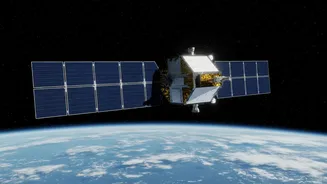
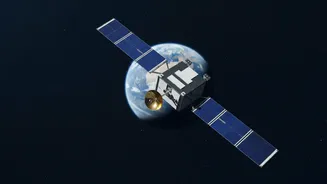
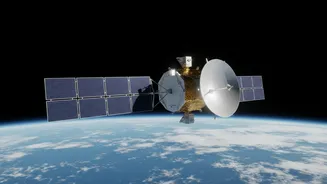
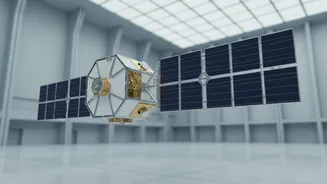
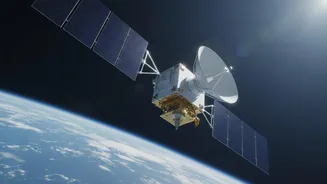
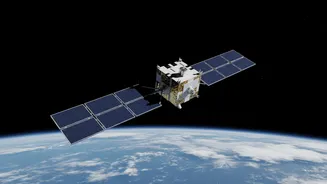
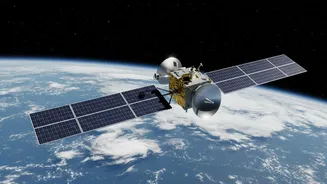
A central theme of SMOPS-2026 was the growing capability of AI to manage and operate spacecraft with minimal human intervention. For decades, satellites have relied on commands from ground control, a process that is becoming unsustainable as thousands of new satellites are launched. With mega-constellations like SpaceX's Starlink already using AI to manage swarms of satellites, the industry is proving that autonomous systems are the solution to this complexity. Discussions at the conference revolved around using AI for everything from mission planning and autonomous navigation to predictive maintenance and optimizing communication links. The goal is to create more efficient, responsive, and self-sufficient spacecraft that can react to changing conditions in real-time.
Why Routine is Revolutionary
The most significant takeaway from the AI discussions was not about dramatic, high-stakes manoeuvres but about the automation of mundane, everyday tasks. Experts emphasized that the greatest value of AI lies in handling the constant, low-level decisions required to keep a satellite or an entire constellation healthy and efficient. This includes tasks like managing power systems, allocating bandwidth, scheduling data collection, and, most critically, collision avoidance. With tens of thousands of objects in orbit, the risk of collision is a constant threat. Automating the 'go/no-go' decision for a potential collision, a process still largely handled by human operators, could dramatically improve the safety and sustainability of space operations.
The Business of Autonomous Satellites
Automating routine decisions has profound economic implications. By handing these tasks to AI, operators can reduce the need for constant human monitoring, which cuts operational costs. AI-driven systems can optimize a satellite's use of fuel and power, extending its operational lifespan and maximizing the return on a very expensive investment. Furthermore, for large commercial constellations that provide services like global internet or Earth imaging, AI can dynamically manage the network to respond to shifting customer demand, ensuring bandwidth is directed where it's most needed and most profitable. This level of efficiency and adaptability is impossible to achieve with human operators alone, making AI a crucial force multiplier.
India's Stake in a Smarter Space
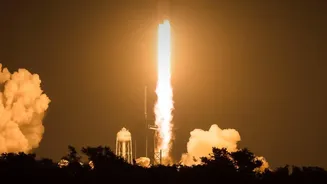
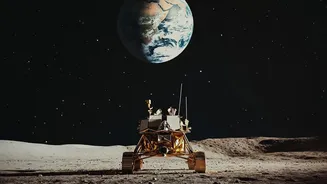
For India, these developments are particularly relevant. With ISRO's ambitious plans, including the Gaganyaan human spaceflight mission and the management of its own growing satellite fleet, the insights from SMOPS-2026 are crucial. The conference, held in India's tech hub, provided a platform for ISRO and the nation's burgeoning private space sector to engage with global innovations. As ISRO Chairman V. Narayanan highlighted, India is already using AI and machine learning in its missions, including the successful Chandrayaan-3 landing. Adopting AI for routine operations will be essential for ensuring the safety of future Indian astronauts and the sustainability of India's assets in an increasingly congested orbital environment.