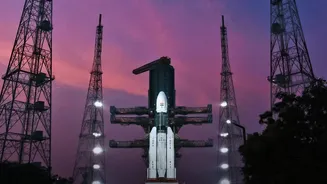








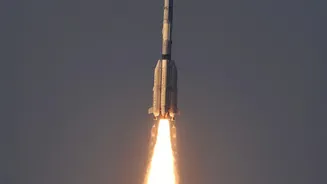

An Unblinking Eye in Geosynchronous Orbit
The EOS-05, also known as GISAT-1A, is not your typical Earth observation satellite. Most remote sensing satellites orbit in a Low Earth Orbit (LEO), a few hundred kilometres up, circling the globe rapidly. This means they can only view a specific location
for a few minutes at a time. EOS-05 is different. It was placed in a geosynchronous orbit nearly 36,000 kilometres above the Earth. From this vantage point, its orbital period matches the Earth's rotation, allowing it to remain stationary over the Indian subcontinent. This unique positioning is a game-changer, transforming the satellite from a passing observer into a persistent, watchful guardian. It is India's first imaging satellite to achieve this, placing the nation in a select group of countries with this advanced capability.
A Game-Changer for Disaster Management
The primary benefit of this constant watch is the ability to monitor rapidly developing events in near-real-time. The satellite's advanced sensors can image the entire Indian landmass roughly every 30 minutes, and focus on specific areas of interest every five minutes. This capability is invaluable for disaster management. Authorities can track the development and movement of cyclones, monitor the spread of forest fires, and assess the extent of floods and cloudbursts with unprecedented frequency. This constant stream of data can significantly cut down emergency warning and reaction times, helping to save lives and coordinate relief efforts more effectively. The frequent updates will help create a more accurate and dynamic picture of a disaster as it unfolds.
Bolstering National Security
Beyond its civilian uses, EOS-05 serves a crucial strategic purpose. The ability to maintain an unblinking gaze over a vast region provides a significant boost to India's national security and surveillance capabilities. The satellite can provide continuous monitoring of sensitive border areas, both on land and at sea, offering vital intelligence and situational awareness. While officials have highlighted its civilian roles, the strategic value of a persistent “eye in the sky” is undeniable. It allows for the monitoring of troop movements, the tracking of maritime activity in the Indian Ocean Region, and enhances the security of strategic assets without the time-lag limitations of older LEO satellites.
Driving Economic and Social Progress
The impact of EOS-05 extends deep into India's economic fabric. The data gathered will support a wide range of applications that drive development. In agriculture, the satellite's multispectral and hyperspectral imagers can monitor crop health, assess soil moisture, and help in yield forecasting, contributing to food security. Urban planners can use the imagery to monitor urban sprawl, manage resources, and plan infrastructure for India's fast-growing cities. Furthermore, the satellite will aid in managing natural resources by keeping track of water bodies, forests, and mineral wealth. This flow of high-quality, frequent data also opens up new commercial opportunities for India's private space and geospatial analytics industry to build upon.
A Major Milestone for ISRO
This successful launch is also a significant achievement for ISRO, marking a comeback and building momentum for future missions. The mission was a successor to the GISAT-1/EOS-03, which was lost due to a launch failure in August 2021. Successfully deploying EOS-05 demonstrates the reliability of the GSLV Mk II rocket and ISRO's ability to overcome technical challenges. The launch on September 4 was ISRO's first success of 2026, ending a seven-month gap and setting a positive tone for other critical missions planned for the year, including the first uncrewed flight of the Gaganyaan programme. It's a statement of resilience and a crucial step forward in India's ambitious space exploration journey.