




More Than a Fast
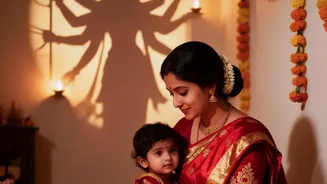
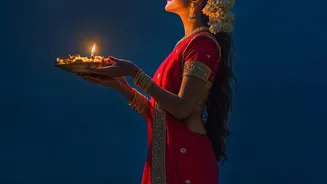
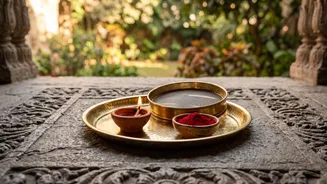
Karwa Chauth is one of North India's most cherished festivals, a day when married women observe a strict nirjala fast—without food or water—from sunrise to moonrise for the health and longevity of their husbands. While the day is filled with vibrant customs
like applying mehendi and dressing in bridal finery, its soul lies in the stories recited during the evening puja. The most prominent of these is the katha of Veeravati, a queen whose experience gives profound meaning to the festival's most iconic rituals. Her story transforms the fast from a test of endurance into a rich narrative of devotion.
The Tale of Queen Veeravati
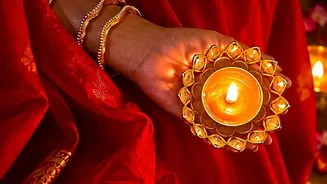
The legend tells of a beautiful queen named Veeravati, the only sister to seven loving brothers. For her first Karwa Chauth after marriage, she was at her parents' home and began the arduous fast. As the day wore on, she grew weak and faint from hunger and thirst, desperately awaiting the moonrise. Her brothers, unable to bear seeing their beloved sister suffer, devised a plan born of love but rooted in deception. They climbed a hill and created an illusion of the moon by holding a lamp or a mirror behind a sieve in the leaves of a pipal tree.
A Deception and Its Consequences
Tricked into believing the moon had risen, Veeravati broke her fast. Almost immediately, ill omens appeared. In some versions of the story, she found a hair in her first bite of food; in another, she sneezed. Soon after, she received word that her husband, the king, had fallen gravely ill or died. Heartbroken, Veeravati rushed to his palace. On her journey, she encountered Lord Shiva and Goddess Parvati (or in some tellings, Goddess Indrani), who revealed the truth: she had broken her fast to a false moon, leading to the tragedy.
Penance, Devotion, and Redemption
Upon learning of her mistake, the distraught queen begged for forgiveness. The goddess, moved by her grief and sincerity, advised her to observe the Karwa Chauth fast again, this time with unwavering devotion and adherence to all rituals. Veeravati spent the next year in penance, performing every fast with utmost faith. On the following Karwa Chauth, she completed the fast correctly, waiting for the real moon. Her true devotion was rewarded, and her husband was brought back to life. This triumphant end cemented the story as a testament to the power of sincere faith.
How the Legend Shapes the Ritual
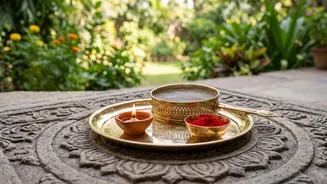
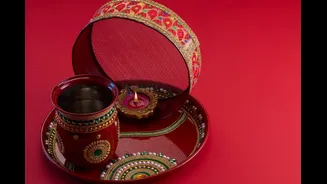
Veeravati's story is the 'why' behind one of Karwa Chauth's most iconic moments: looking at the moon through a chhalni, or sieve. This act directly echoes the queen's cautionary tale. The sieve serves as a tool to ensure one is looking at the true moon, not a deceptive imitation, reminding observers of the importance of patience and authenticity in devotion. It acts as a symbolic filter, separating the real from the false. Furthermore, the ritual of looking at one's husband through the same sieve after viewing the moon signifies the filtering of all negativity, leaving only pure love and blessings for the marriage.
The Enduring Message of Faith
The legend of Veeravati does more than just explain a ritual; it infuses the entire festival with a deep spiritual message. It highlights that intention matters, but so does completing a vow with integrity. The brothers' love was pure, but their trick led to disaster, teaching that even well-meaning shortcuts in matters of faith can have consequences. Ultimately, the story is one of hope and redemption. It reinforces the belief that sincere devotion, patience, and the grace of the divine can overcome even the gravest of misfortunes, strengthening the marital bond.