








The Big Picture: What is Fleet Averaging?
A fleet-average system doesn't judge a car company based on a single model. Instead, regulators look at the average fuel efficiency or emissions of every single passenger vehicle a manufacturer sells over an entire year. Think of it like a final grade
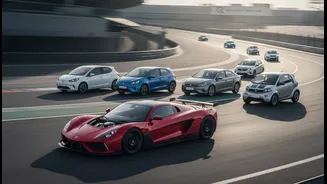
in school. One poor test score doesn't necessarily mean you fail the class if your other scores are high enough to pull up your average. For carmakers, this means they can still produce and sell less efficient, high-performance cars or large SUVs, as long as they also sell a sufficient number of highly efficient vehicles to balance out their overall score.
It is All in the Numbers
The calculation at the heart of this system is a sales-weighted average. This means that a model’s contribution to the average is determined by how many units of it are sold. For example, selling 100,000 units of a small, fuel-sipping hatchback has a much bigger positive impact on a company’s average than selling 5,000 units of a gas-guzzling sports car has a negative one. This is the mathematical key to the system. It incentivises manufacturers to not only develop efficient cars but also to make sure they sell well. The more popular a company’s efficient models are, the more room it has to offer niche, high-margin vehicles that are less focused on fuel economy.
India’s Fuel Efficiency Mandate
In India, this framework is known as the Corporate Average Fuel Economy (CAFE) norms, which are administered by the Bureau of Energy Efficiency (BEE). First introduced in 2017, these standards set a corporate average target for carbon dioxide (CO2) emissions, measured in grams per kilometre (g/km). Since fuel consumption is directly linked to CO2 emissions, a lower g/km target effectively mandates better fuel efficiency. The norms apply to all passenger vehicles, including petrol, diesel, CNG, hybrid, and electric models. The regulations are being progressively tightened in phases, pushing manufacturers to continuously innovate and improve the efficiency of their entire product portfolio sold in the country.
The EV and Hybrid Advantage
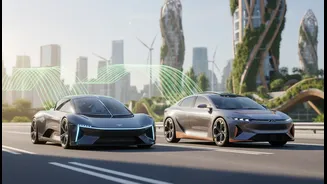
To encourage a shift toward cleaner technology, the system includes powerful incentives. Vehicles with very low or zero emissions, such as battery electric vehicles (BEVs) and, to a lesser extent, strong hybrids, are often granted 'super credits'. This means that for the purpose of calculating the fleet average, each EV sold might count as multiple non-electric cars. This has a massive positive impact on a manufacturer’s compliance calculations. It effectively provides a shortcut to meeting the targets and is a major reason why every carmaker is aggressively expanding its electric and hybrid lineups. These super credits allow them to offset the emissions from their popular internal combustion engine models, especially larger SUVs.
The High-Thirst, High-Margin Bet
This brings us back to the headline. A single inefficient car—or even an entire model line of them—does not automatically result in a penalty for a manufacturer. Automakers view their product portfolios strategically. Large SUVs and luxury vehicles are often highly profitable. The fleet-average system allows them to continue participating in these lucrative market segments. They can do this as long as they have a clear strategy to balance these sales with high-volume, efficient small cars and a growing portfolio of electric and hybrid vehicles. It's a calculated business decision where the profits from one segment help fund the technology and sales strategy needed to comply in another.
Your Choices at the Showroom
For the consumer, this regulatory environment shapes the entire market. It’s the driving force behind the wider variety of engine options, the rise of hybrid technology in mainstream models, and the marketing push for electric cars. While it allows your favourite large SUV to remain in the showroom, it also ensures that the manufacturer is investing heavily in the cleaner, more efficient cars of tomorrow. The system is designed to guide the entire industry towards a more sustainable future, not by banning specific vehicles, but by making overall efficiency a non-negotiable part of every company’s business plan.