





What is NavIC and Why Is It Vital?
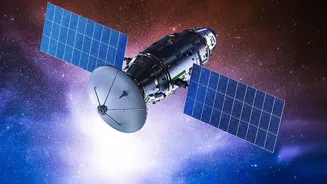
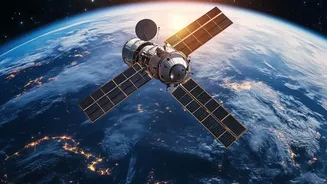
Navigation with Indian Constellation (NavIC) is India’s homegrown answer to the American GPS. Born from the strategic necessity realised during the 1999 Kargil War, when access to foreign navigation data was not guaranteed, NavIC was designed to give
India sovereign control over positioning, navigation, and timing services. The system provides coverage over the Indian mainland and a 1,500-kilometre region around it. For the military, this means secure and uncompromised navigation for missiles, warships, and troops, ensuring strategic autonomy. For civilians, it promises everything from more accurate mapping and transport management to disaster relief coordination and precise time-stamping for financial transactions.
A Constellation in Crisis
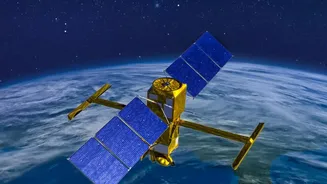
Despite its ambitions, the NavIC system is currently in a state of operational crisis. A navigation system requires a bare minimum of four functional satellites to pinpoint a user's precise location. As of late 2026, India's constellation has fallen to just three fully operational satellites, rendering its standalone positioning service inactive. The root cause has been a persistent and frustrating problem: the failure of imported rubidium atomic clocks aboard the first generation of NavIC satellites. These ultra-precise clocks are the heart of any navigation satellite, and their repeated malfunctions have systematically degraded the constellation. The final blow came in March 2026, when the last functioning clock on the IRNSS-1F satellite failed after completing its decade-long mission life.
A History of Setbacks
ISRO’s attempts to replenish the ailing constellation have been fraught with challenges. The journey to fortify NavIC has been a story of near misses and unfortunate failures that have compounded the clock problem. In 2017, a replacement satellite, IRNSS-1H, was lost during launch when the rocket's heat shield failed to separate. More recently, in January 2025, the NVS-02 satellite was successfully launched into a transfer orbit, but a subsequent failure in its propulsion system left it stranded and unable to reach its designated operational orbit. These setbacks have increased the pressure on each subsequent launch, making the upcoming NVS-03 mission not just a routine replenishment but a high-stakes recovery operation.
NVS-03: The Satellite of Hope
Scheduled for launch between October 15 and 20, NVS-03 represents a significant step forward. As a second-generation satellite, it carries key upgrades designed to address past shortcomings and enhance the system's utility. Most critically, it is equipped with an indigenously developed rubidium atomic clock, which is expected to be more robust than the imported ones that plagued its predecessors. Furthermore, NVS-03 will broadcast signals in the L1 frequency band, the same band used by GPS and widely supported in consumer devices. This move will make it far easier for NavIC to be integrated into everyday smartphones and gadgets without requiring special hardware, significantly broadening its potential user base.
The Path to Restoration
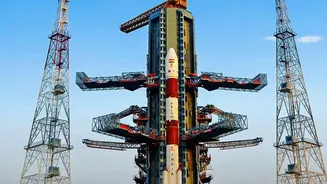
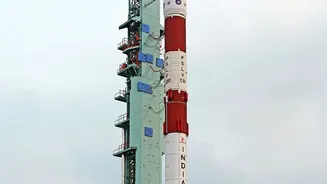
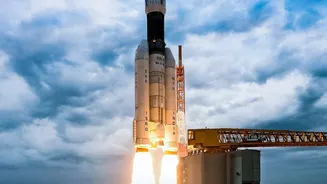
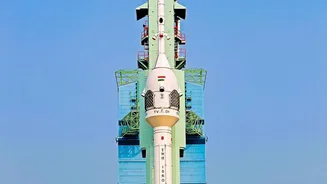
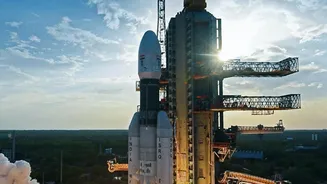
A successful launch is just the first step. After being placed into orbit by the GSLV-MkII rocket, NVS-03 must successfully execute its own orbital manoeuvres, deploy its systems, and begin transmitting validated navigation signals. If all goes to plan, it will become the crucial fourth satellite, restoring NavIC's ability to provide standalone positioning services. This would be a monumental achievement, reactivating a key piece of India's strategic infrastructure. From there, ISRO plans to continue strengthening the system. Two more satellites, NVS-04 and NVS-05, are already in advanced stages of production, with the ultimate goal of building a robust, fully operational seven-satellite constellation.