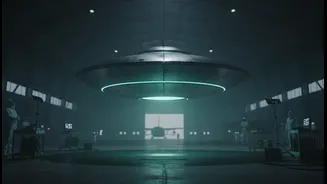








From 'Flying Saucers' to 'Anomalous Phenomena'
First, let's talk about the name change. For decades, we had UFOs, a term loaded with cultural baggage. Today, official bodies like the Pentagon use UAP, which stands for Unidentified Anomalous Phenomena. This isn't just bureaucratic jargon; it's a deliberate
choice. It expands the scope beyond just 'flying' objects to include strange things seen in space or underwater. More importantly, it signals a move away from pop culture assumptions and towards a more rigorous, data-driven investigation. NASA and the Department of Defense's All-domain Anomaly Resolution Office (AARO) are trying to turn compelling anecdotes into analyzable data. But they’ve hit a fundamental roadblock: the very language used by the people who see these things.
The Problem with Human Perception
Recent UAP document releases, including a new batch on July 10, 2026, are filled with eyewitness accounts. We hear from military pilots, law enforcement, and civilians describing everything from a “potato-shaped” object to a luminous “mother orb” that releases smaller red orbs. These descriptions are vivid and compelling. However, cognitive psychology tells us that what we see and what we remember are two different things. Our brains are pattern-matching machines, prone to seeing familiar shapes in ambiguous stimuli—a phenomenon called pareidolia. When faced with something truly strange, our minds struggle to find a reference point. As research shows, memory is highly malleable and can be distorted by stress, expectation, or even the questions someone asks after the event.
Words That Shape Reality
The specific words a witness chooses can fundamentally alter an investigation. An object described as moving with “impossible” speed isn’t a data point; it’s an interpretation. What one pilot considers impossible, another might see as an unfamiliar but explainable flight characteristic. Even the term 'orb' is subjective. In recent files, witnesses describe a “plasma-like sphere” and glowing orbs moving in formation. While a June 2026 AARO report noted the consistent language used by agents describing these orbs, it also acknowledged the perceptual limitations of observing unreferenced objects in low light. An investigator hearing these terms is already being led down a specific path, one that may exclude more mundane explanations like advanced drones, atmospheric conditions, or sensor artifacts.
The Search for a Neutral Language
Recognizing this challenge, official efforts are now focused on standardizing the reporting process. Until recently, there was no single, unified way for military or civilian pilots to report a UAP. Now, agencies like the FAA are quietly updating procedures to formalize reporting UAP within existing safety frameworks, removing the stigma that has prevented many pilots from speaking up. The goal is to collect raw, objective data first. Instead of asking a witness to describe what they think they saw, new protocols will focus on quantifiable metrics: angular size, speed across the viewer's visual field, duration, and any sensor data that might corroborate the sighting. This moves the process from collecting stories to gathering evidence that can be scientifically scrutinized, a necessary step if the mystery is to be solved.
Respect the Witness, Question the Noun
This focus on language doesn't mean dismissing eyewitnesses. In fact, it does the opposite. By treating their testimony with scientific rigor, investigators show they are taking the reports seriously. A credible, highly-trained witness like a military aviator can accurately report an event without being able to identify its cause. The latest document dumps, spurred by a push for transparency, reveal a long history of credible people seeing things they can't explain. The challenge for AARO and other bodies is to respect the integrity of the witness while maintaining skepticism about the conclusions they draw. The truth may be in the files, but finding it means learning to read between the words and focusing on the raw data hidden within the narrative.