



India's Historic Leap into Orbit
The Gaganyaan programme represents a monumental ambition for the Indian Space Research Organisation (ISRO) and the nation. The goal is to launch a crew of two to three astronauts into a 400-kilometre orbit around the Earth. For three days, they will live
and work in a sophisticated crew module, conducting experiments and marking India's entry into the exclusive club of nations capable of human spaceflight. The mission has captured the country's imagination, symbolising a new era of scientific prowess. While every phase of the mission is complex, from the human-rated launch vehicle to the life support systems, no part is more critical than the final moments: the return journey.
The Fiery Return and the Parachute Promise
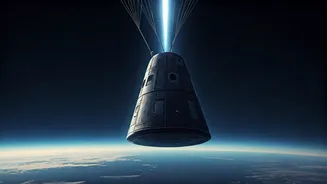
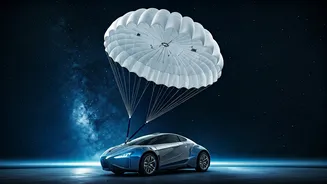
Bringing astronauts back from space is arguably the most dangerous part of any human spaceflight mission. The crew module, after separating from its service module, will re-enter Earth's atmosphere at immense speeds. It must withstand scorching temperatures and extreme forces before beginning its deceleration. The key to survival lies in a perfectly executed parachute deployment sequence. For Gaganyaan, this involves a complex system of ten parachutes that must deploy in a precise order to slow the module from hypersonic speeds to a gentle splashdown in the Indian sea. Any failure in this system could be catastrophic, which is why ISRO is committed to testing it with unprecedented rigour.
Introducing SOLVE: A Custom-Built Test Platform
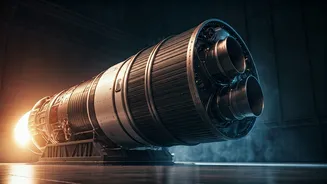
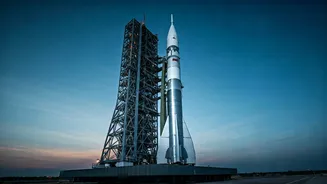
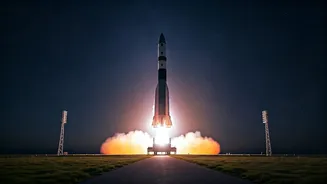
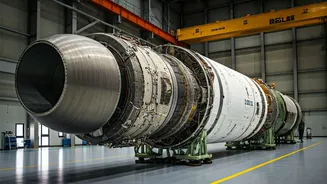
To ensure the parachute system is flawless, ISRO has developed a new tool: the Sub-Orbital Launch Vehicle for Experiments, or SOLVE. This is not an orbital rocket like the PSLV or GSLV, but a smaller, dedicated test vehicle designed for a very specific job. Its purpose is to carry a replica of the Gaganyaan crew module to an altitude between 10 and 17 kilometres and then release it, simulating the conditions it would face during an actual return from orbit. This allows engineers to repeatedly test the entire parachute sequence in a realistic environment. The SOLVE rocket is cleverly adapted from the proven solid-fuel strap-on boosters used in India's workhorse PSLV rocket, modified with features like a slow-burning propellant to achieve the right test conditions.
How SOLVE Provides the Critical 'Boost'
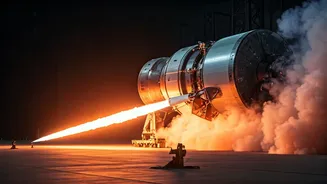
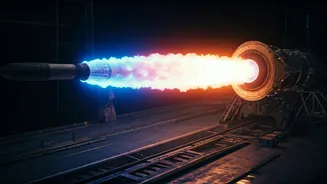
The 'boost' from SOLVE comes from the flexibility and reliability it offers. Previously, tests like the Integrated Air Drop Test involved dropping a module from a helicopter. While useful, SOLVE provides a much higher-fidelity simulation of the actual mission profile. On July 3, 2026, ISRO successfully conducted the first static ground test of the solid motor that will power SOLVE at the Satish Dhawan Space Centre in Sriharikota. The motor performed exactly as expected, a major milestone that clears the way for future flight tests. By having a dedicated vehicle, ISRO can conduct repeated test missions under a wide variety of simulated conditions, allowing them to gather more data and build more confidence in the crew module's recovery system than ever before. This repeatable, high-altitude testing is the crucial advantage that SOLVE brings to the table, significantly enhancing the safety and reliability of the entire Gaganyaan programme.