



The Root of the Problem: Melting Ice
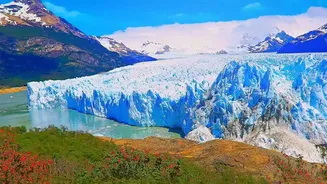
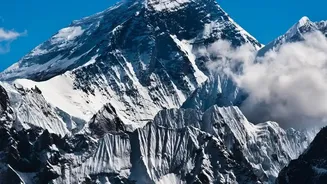
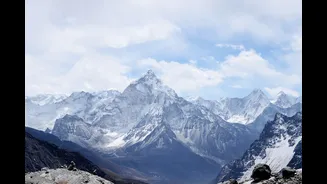
The Hindu Kush Himalaya region is warming significantly faster than the global average. This accelerated warming is causing glaciers to shrink and retreat at an unprecedented pace. According to a report from the International Centre for Integrated Mountain
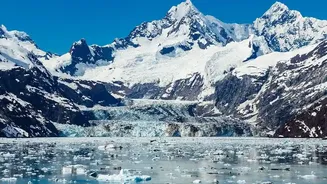
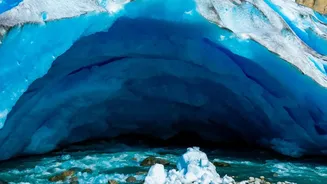
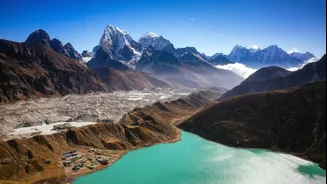
Development (ICIMOD), glacier melt in the region has doubled since the year 2000, and the rate of loss has increased by 65% since 2010. As these rivers of ice recede, they leave behind depressions that fill with meltwater, creating thousands of new glacial lakes. Many of these lakes are dammed by moraines—unstable walls of rock and debris left behind by the retreating glacier.
What is a Glacial Lake Outburst Flood?
A Glacial Lake Outburst Flood, or GLOF, is the sudden and catastrophic failure of a moraine or ice dam. When the dam breaks, it releases a massive volume of water and debris downstream. These floods are exceptionally powerful, with peak discharges many times greater than normal monsoon floods, and can travel over 100 kilometres. Triggers for a GLOF can include avalanches or rockfalls crashing into the lake, which creates a displacement wave that overtops the dam, or even the long-term degradation of the dam itself from water seeping through it. Recent events have also been linked to the thawing of permafrost—the frozen ground that acts as a 'glue' for mountain slopes—making large-scale ice and rock avalanches more likely.
Why Nepal Is Uniquely Vulnerable
Nepal's geography places it directly in the path of this emerging danger. The country's complex topography, fragile geology, and the location of many communities and critical infrastructure in steep river valleys make it one of the world's most vulnerable nations to climate change. A 2014 survey identified 1,466 glacial lakes within Nepal, 21 of which were deemed potentially dangerous. More recent studies have identified 47 high-risk glacial lakes and glaciers across the major river systems that flow through Nepal. As settlements expand, people are often forced to build on steeper, more hazardous slopes, increasing their exposure to both landslides and floods.
The Devastating Human Cost
When a GLOF occurs, the consequences are devastating. The wall of water, mud, and boulders can obliterate entire villages, destroy roads and bridges, and wipe out crucial infrastructure like hydropower plants, which Nepal relies on heavily for its electricity. A catastrophic flood in August 2026, triggered by a massive glacier collapse, resulted in more than a thousand deaths and thousands more missing across Nepal and Tibet, demonstrating the lethal power of these events. Beyond the immediate loss of life, these disasters cause long-term economic damage, displace communities, and destroy agricultural land, compounding poverty in a nation already facing significant challenges.
Can These Disasters Be Prevented?
Preventing a massive glacier collapse is impossible, but managing the risk is not. Efforts are underway to mitigate the danger from GLOFs. This includes using satellite imagery and drones to monitor the growth of dangerous lakes. In some cases, engineering solutions can lower the water level in high-risk lakes, reducing the pressure on their fragile dams. Early warning systems, which use sensors to detect changes in water levels and trigger alarms for downstream communities, are also crucial. However, the scale of the threat is immense, and these disasters can unfold with terrifying speed, leaving little time to react. Experts agree that a regional approach to monitoring and data sharing is urgently needed, as a hazard originating in one country can have catastrophic effects across borders.