




An Architect of the AI Revolution
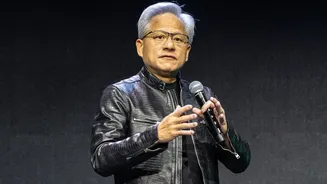
To understand the challenge facing Nvidia, one must first appreciate Jensen Huang's monumental legacy. Co-founding the company in 1993, he transformed it from a niche gaming graphics card maker into the undisputed leader of the artificial intelligence
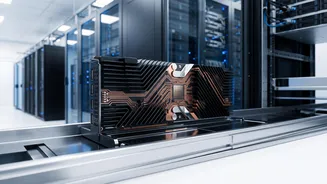
revolution. Huang's vision was to see that the parallel processing power of Graphics Processing Units (GPUs) could be used for more than just video games. This led to the creation of CUDA in 2006, a software platform that unlocked GPUs for general-purpose computing and became the foundation for the AI boom. He didn't just sell chips; he built entire 'AI factories'—integrated systems of hardware, software, and networking that power the world's most advanced data centres. His leadership style was central to this success; he was known as the 'beating heart of the company', personally steering its product roadmap and strategic investments.
The Succession Dilemma
Replacing a founder-CEO who has been in charge for over 30 years is a monumental task for any company. The board has appointed Chief Financial Officer Colette Kress as interim CEO while it searches for a permanent successor. Kress is a respected executive with deep knowledge of the company's finances and strong relationships with investors. However, some analysts believe the permanent role requires a leader with a deep technical background to maintain Nvidia's innovative edge. One prominent internal candidate is Ian Buck, the head of Nvidia's crucial data centre business and a key architect of the CUDA software platform. The board is also reportedly considering external candidates, including leaders from rival chipmakers like Arm CEO Rene Haas. The challenge is finding a leader who can not only execute on the current strategy but also possess the vision to navigate the next technological shift, much as Huang did multiple times in Nvidia's history.
Company Strengths and Persistent Demand
Despite the leadership vacuum, Nvidia's underlying business remains incredibly strong. The company recently posted record quarterly revenues that far exceeded analyst expectations, a clear sign that demand for its AI chips is not slowing down. This demand is expected to outstrip supply for the next couple of years. Nvidia's competitive moat is formidable, built on its superior technology, a vast and loyal developer ecosystem built around CUDA, and its transformation into a full-systems provider for AI infrastructure. Interim CEO Colette Kress has expressed confidence, stating, 'Our momentum is real. Our demand is accelerating. Our supply is growing.' The company also has a product roadmap in place for the next two years, providing a degree of stability during the transition.
Navigating Headwinds and Investor Jitters
The transition comes at a time of growing challenges. Competition is intensifying as some of Nvidia's biggest customers—including Google, Microsoft, and Amazon—are developing their own custom AI chips to reduce their reliance on a single supplier. Furthermore, the company faces ongoing geopolitical risks, particularly concerning U.S. export controls on advanced chips to China, a significant market for Nvidia. Huang's departure has created significant uncertainty, which has been reflected in the company's stock price. Analysts have highlighted the lack of a clear succession plan as a major risk, and the market is now grappling with how to value a company so intertwined with its founder's identity. Historically, stocks of companies whose CEOs depart under a cloud of personal conduct have underperformed the market in the following year.