




The Silent Storytellers
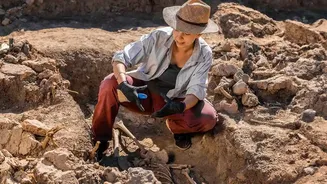
Across archaeological sites, from burial mounds to ancient settlements, pottery is one of the most common finds. Unlike materials like wood or fabric, fired clay is incredibly durable, capable of surviving for millennia. For a long time, the shape, size,
and decoration of these vessels gave archaeologists clues about their purpose—was it a large urn for storing grain, a beaker for drinking, or a ceremonial pot for rituals? These physical attributes helped map cultural traditions and timelines. But the pots themselves held a deeper secret, absorbed deep within their porous clay walls: the chemical ghosts of their last contents. Unlocking that information was a different challenge altogether.
Archaeology's CSI Moment
Enter the world of organic residue analysis. Think of it as a forensic investigation for ancient artifacts. Scientists take small fragments of a pot and use advanced techniques to extract and identify microscopic traces of fats, oils, waxes, and other organic compounds that became trapped in the pottery during its use. The primary tools for this are powerful laboratory machines like gas chromatographs and mass spectrometers (GC-MS). These instruments can separate complex mixtures into their individual chemical components, creating a unique fingerprint. By comparing these fingerprints to modern substances, scientists can identify if a pot once held milk, meat, olive oil, wine, or even specific plants. This process provides direct evidence of what people were eating, drinking, and trading thousands of years ago.
A Glimpse into the Bronze Age Pantry
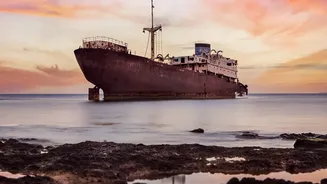
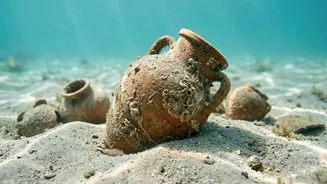
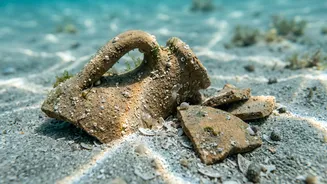
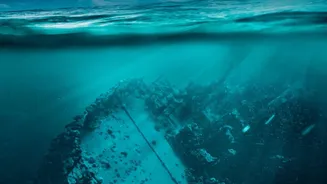
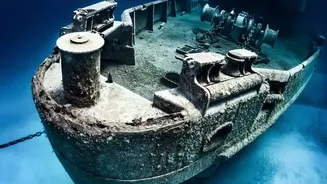
So, what have these investigations revealed? The findings paint a surprisingly detailed picture of ancient life. For example, residue analysis has provided some of the earliest concrete evidence of cheesemaking and other dairy processing. In Somerset, UK, lipids absorbed into Middle Bronze Age pots strongly indicated they were used for storing milk, butter, or yoghurt. In Azerbaijan, analysis of vessels from a similar period revealed markers for various fruits, including compelling evidence of grape products like wine or syrup. A recent discovery of a shipwreck off the coast of Turkey, dating back 4,400 to 4,700 years, uncovered ceramic jars that likely transported commodities such as olive oil and wine. One unusual vessel from that wreck, with strange markings and holes, has led researchers to speculate it might have even been a churn for making butter or cheese at sea.
Mapping a Connected World
Perhaps the most significant revelations from these vessel analyses concern ancient trade. Finding out what was inside a pot is one thing; figuring out where it came from is another. By analyzing the clay itself, archaeologists can often pinpoint its geological origin. When the contents are also identified, it opens a window into vast trade networks. For instance, the cargo from the ancient shipwreck found off Turkey included jars made from clay traced back to the Jordan Valley. This suggests an established maritime trade route connecting the Levant with the Aegean and possibly Egypt nearly five millennia ago. Such findings provide physical proof of what was previously only hinted at in historical texts—a bustling, interconnected Bronze Age world where goods, ideas, and people moved across incredible distances. A pot found in one region containing a product from another tells a story of travel, economy, and cultural exchange.