




The 'Doomsday Glacier' Explained
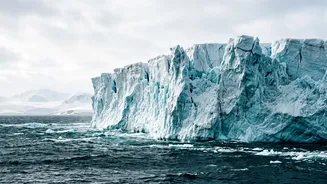
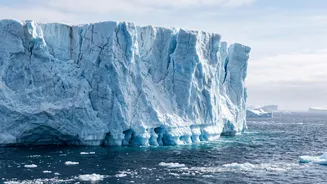
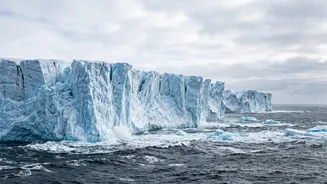
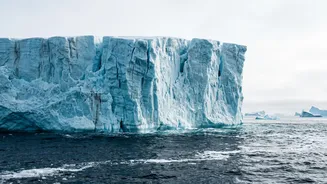
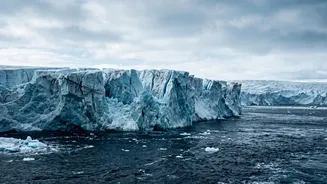
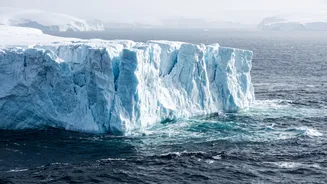
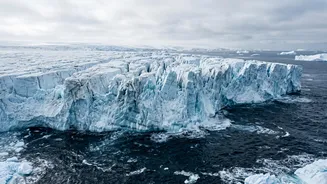
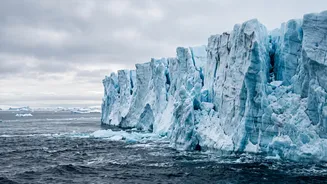
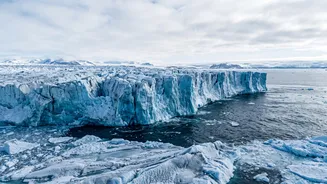
Thwaites is the world's widest glacier, a colossal river of ice roughly the size of Florida. It currently contributes about 4% of annual global sea-level rise, a figure that is already concerning. Its alarming nickname comes from the catastrophic potential
of its collapse. Thwaites itself holds enough ice to raise global sea levels by more than two feet (about 65 cm). More critically, it acts as a natural dam, or a 'cork', holding back the much larger West Antarctic Ice Sheet. Scientists fear that if Thwaites were to collapse entirely, it could unleash a cascade of ice that would ultimately lead to a devastating 10 feet of sea-level rise.
A Doubling of Danger
Recent findings from glaciologists at the University of California, Irvine, and NASA's Jet Propulsion Laboratory paint a more urgent picture. By developing a more sophisticated computer model, they have recalibrated their predictions for the glacier's impact. The new study, published in Nature Communications, projects that Thwaites could contribute up to 30 millimeters (1.2 inches) to global sea levels by the year 2100. This figure is roughly double the amount projected by previous conventional models, which estimated a contribution of around 15 millimeters.
What the New Science Shows
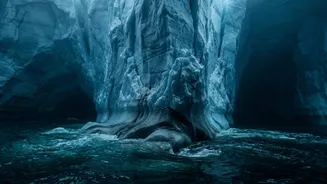
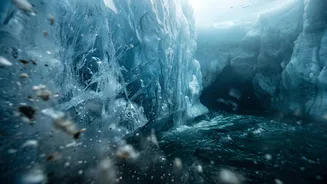
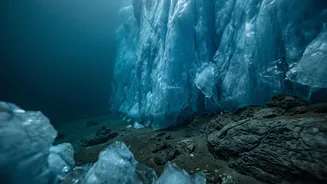
The major difference in the new model lies in how it understands the 'grounding line' — the point where the glacier lifts off the seabed and begins to float. Previous models treated this as a fixed, stable line. However, satellite data and new analysis show it is actually a much wider 'grounding zone', several kilometres across, where warm ocean water is pushed deep underneath the ice with the rise and fall of tides. This process, known as 'tidal pumping', allows warm seawater to cause vigorous melting far inland from the glacier's edge, weakening its grip on the seafloor. The model also accounts for the glacier's precarious position on a downward-sloping bedrock, which exposes more ice to warm water as it melts.
Losing Its Grip
A key part of Thwaites' relative stability has been an underwater mountain called the Mouginot Ridge, which helps to pin the glacier in place. The new research shows that the intensified melting at the grounding zone is accelerating the 'unpinning' of the glacier from this ridge. The study found there is a 60% chance that Thwaites will become completely detached from the ridge by the end of the century, with some simulations suggesting it could happen as early as the late 2030s. Once it loses that anchor, its retreat could quicken dramatically.
The View From India's Coastline
While an extra inch of sea-level rise may sound minor, its effects are magnified globally, especially for a country like India with a 7,500-kilometre coastline. Rising seas exacerbate coastal erosion, which is already affecting about a third of India's coast. Major economic hubs like Mumbai, Kolkata, and Chennai are at increased risk of more frequent and severe flooding. Furthermore, rising sea levels lead to saltwater intrusion into freshwater sources, threatening drinking water supplies and agriculture in coastal regions. The fragile Sundarbans mangrove ecosystem, a critical buffer against storms, is also under severe threat. Experts estimate that around 45 million people in India could be exposed to risks from sea-level rise by 2050.