






The Rise of Reusable Rockets
For decades, rockets were single-use machines. They would launch a payload into orbit and their expensive components would either burn up in the atmosphere or be discarded in space. This model made space access incredibly expensive. In recent years, companies
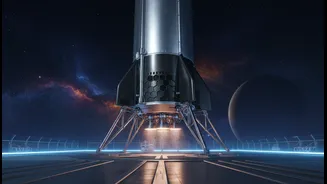
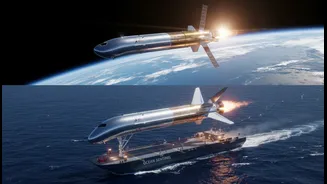
like SpaceX have revolutionized the industry by developing partially reusable rockets, like the Falcon 9, which can land its first-stage booster back on Earth for inspection, refurbishment, and reuse. This has dramatically lowered launch costs and increased the frequency of missions. Now, a global race is on to develop the next generation of reusable launch systems, with established players and ambitious startups all vying for a piece of the rapidly growing space economy.
Agnikul's Ambitious Mission-02
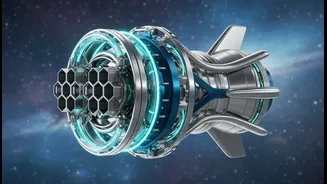
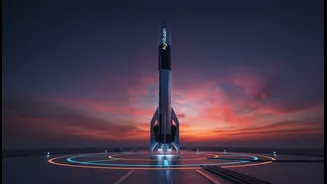
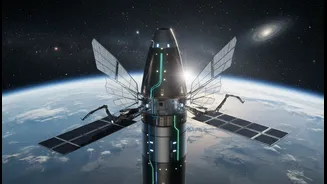
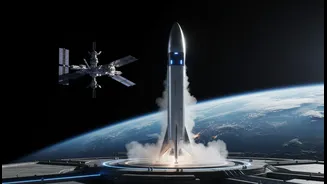
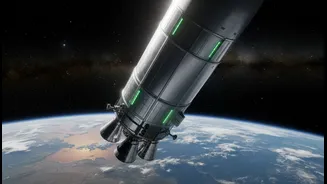
Chennai-based startup Agnikul Cosmos has thrown its hat into the ring with a newly announced plan called Mission-02. This mission has two primary, ambitious goals. The first is to achieve India's first-ever recovery of an orbital-class rocket booster after launch, a major step toward developing its own reusable rocket technology. But it's the second goal that is truly forward-thinking. Instead of letting the rocket's second stage—the part that carries the satellite to its final orbit—become another piece of dangerous space junk, Agnikul plans to convert it into a functional, in-orbit platform. This idea of upcycling rocket parts that are already in space represents a major shift from simply discarding them.
From Trash to Orbital Treasure
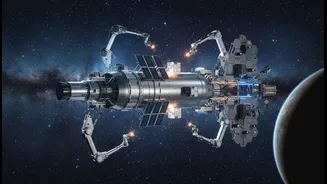
The concept behind the second part of Mission-02 is a cornerstone of the emerging field of in-space servicing, assembly, and manufacturing (ISAM). A spent upper stage is essentially a large, empty, and durable metal structure orbiting Earth. The vision is to use this existing hardware as the foundation for new applications. Agnikul's co-founder and CEO, Srinath Ravichandran, notes that the mission aims to demonstrate flexibility and modularity for economically viable missions. A converted upper stage could serve as a host for scientific experiments, a station for testing new technologies, or even a building block for larger future space infrastructure. This approach avoids the immense cost and complexity of launching a dedicated platform from scratch.
The Bigger Picture: A Sustainable Space Economy
Successfully converting a spent rocket stage would be a game-changer for space sustainability. Spent upper stages are among the most dangerous types of orbital debris due to their mass and the potential for explosion from leftover fuel. Finding a way to reuse them would not only clean up crucial orbits but also create value. This aligns with a broader vision for a circular space economy, where materials are recycled and repurposed in orbit. Companies like Airbus and others are exploring 3D printing with materials sourced from space debris or building vast structures assembled by robots in space. Repurposing large structures like upper stages is a significant step in that direction, potentially reducing our reliance on costly and resource-intensive launches from Earth.
The Challenges Are Astronomical
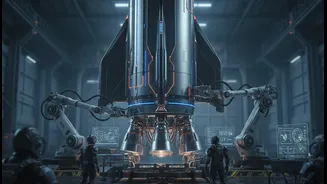
Despite the promise, the technical hurdles are immense. Reusing an upper stage is significantly more difficult than recovering a first-stage booster. The upper stage travels at much higher speeds, making any potential atmospheric reentry incredibly challenging. For in-orbit conversion, the stages are not designed to be modified; they are often tumbling uncontrollably and lack docking points for robotic servicing vehicles. The task would require highly advanced robotics to capture, stabilize, and then modify the stage in the harsh environment of space. While the technology for such complex in-orbit work is developing, it remains a high-risk, high-reward frontier.