






What Is the Mecca Defence Agreement?
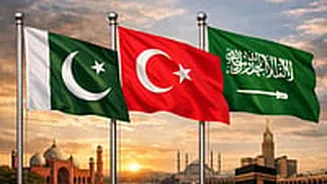
Signed on August 7, 2026, the Mecca Joint Defence Agreement establishes a formal mutual defence pact between Saudi Arabia, Turkey, and Pakistan. The core of the agreement is a collective security clause similar in principle to NATO's Article 5: an armed
attack on any of the three members shall be considered an attack on them all. The pact builds on a previous bilateral defence agreement signed between Saudi Arabia and Pakistan in September 2025. While officials from the signatory nations have stressed its defensive nature and stated it targets no specific country, its formation amid significant regional instability has ensured it is being watched closely from all major world capitals, including New Delhi.
A New Strategic Triangle
The agreement creates a new strategic triangle by linking Saudi Arabia's financial might and religious influence, Turkey's advanced military technology and NATO experience, and Pakistan's military manpower and nuclear status. For the signatories, the pact is a form of 'strategic hedging' — diversifying their security options at a time of perceived uncertainty about long-term U.S. commitments in the region. For Saudi Arabia, it offers a framework for protecting critical infrastructure. For Turkey, it opens doors for defence-industrial exports. For Pakistan, it elevates its role as a key security player in the Islamic world and strengthens its position in West Asia.
Why It's a Talking Point in India
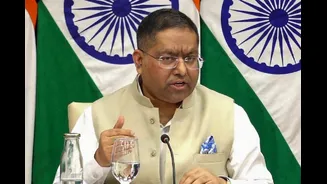
The inclusion of Pakistan is the primary reason the Mecca Agreement has become a subject of intense debate in India. The pact formalises a security relationship between two of India's key partners in the Gulf and its primary geopolitical rival. This development raises immediate questions about its potential impact on regional stability and India's strategic calculations, especially during a potential future crisis in South Asia. India’s Ministry of External Affairs has officially stated it is examining the pact's implications for national security. The concern is not necessarily that the pact is aimed at India, but that it complicates a regional security environment where New Delhi has carefully built independent, positive relationships with all major players.
The Challenge to India's Balancing Act
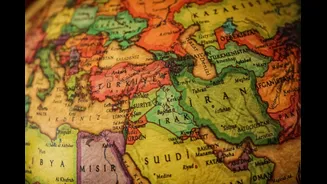
For years, India has successfully pursued a 'de-hyphenated' foreign policy in the Middle East, maintaining strong ties with rivals like Iran, Israel, Saudi Arabia, and the UAE simultaneously. The Mecca Agreement challenges this delicate balance. With Pakistan now a formal defence partner of Saudi Arabia, a cornerstone of India's Gulf strategy, New Delhi faces a more complex diplomatic landscape. Strategic thinkers in India are now debating how to respond, with many suggesting a reinforcement of bilateral ties with Gulf partners to ensure India's interests are protected. The goal is to prevent the Saudi-Pakistan dimension of the pact from affecting the robust and growing India-Saudi strategic partnership.
Not an 'Islamic NATO,' But Still Significant
While the comparison to NATO is common, most analysts agree that the Mecca Agreement is not yet an 'Islamic NATO'. It currently lacks the integrated command structure, deep military interoperability, and unified political will that define the North Atlantic alliance. The strategic priorities of Saudi Arabia, Turkey, and Pakistan also differ significantly. However, its significance should not be dismissed. The pact represents a major step toward a new, multipolar security order in the Middle East, where regional powers are increasingly shaping their own alliances. For India, it serves as a critical reminder that the strategic geography of the Indian Ocean and the Gulf is evolving, requiring constant vigilance, diplomatic dexterity, and a clear-eyed focus on its own national interests.