



What Happened Onboard Flight AI2379
On August 4, 2026, Air India flight AI2379, an Airbus A320neo, was on a routine journey from Phuket, Thailand, to New Delhi. The flight, carrying 137 passengers and eight crew members, was at cruising altitude when it experienced a sudden and violent
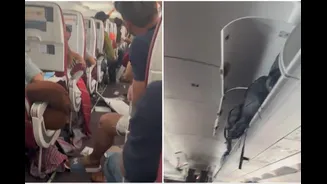
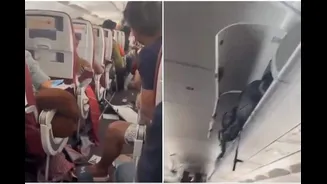
event. The aircraft plunged approximately 300 feet, causing chaos inside the cabin. Passengers and crew who were not secured were thrown into the air, with some hitting the ceiling. The turbulence, which reportedly lasted for about five minutes, resulted in significant damage to interior panels and overhead bins. Despite the dramatic drop, the flight crew quickly stabilised the aircraft. The plane continued its journey to Delhi and landed safely.
The Human Cost of Turbulence
The sudden loss of altitude resulted in numerous injuries. In total, 17 people—13 passengers and four cabin crew members—required medical attention upon landing. Emergency medical teams were on standby at the Delhi airport to provide immediate assistance. The injuries varied, with some passengers suffering minor issues while several crew members sustained more serious spinal and neck injuries. One passenger recounted the terror, stating his father was thrown from his seat and hit the aircraft roof. Civil Aviation Minister Ram Mohan Naidu visited the injured in the hospital and praised the crew's bravery for continuing to assist passengers for the remaining hour of the flight despite their own injuries. By the next day, all hospitalized passengers had been discharged, though some crew members remained under medical care.
Investigating the Cause
India's Directorate General of Civil Aviation (DGCA) immediately launched a detailed investigation into the incident. Upon landing, the aircraft was moved to a separate hangar, and its crucial 'black boxes'—the Flight Data Recorder (FDR) and Cockpit Voice Recorder (CVR)—were secured for analysis. While Air India initially described the event as a brief turbulence-related incident, the severity has prompted a deeper probe. Investigators are examining all possibilities. The leading theory is severe atmospheric turbulence, potentially Clear-Air Turbulence (CAT), which is notoriously difficult to detect. However, some reports suggest that investigators are also considering the possibility of a technical fault with the aircraft's fly-by-wire system as a potential contributing factor, a question the flight recorders should help answer definitively.
Control and Safety in Modern Aviation
The headline fact that the aircraft remained controllable is a crucial part of this story. While a 300-foot drop is startling and dangerous for anyone unbuckled, it is an event modern aircraft like the A320 are designed to handle. The pilots’ ability to stabilise the plane and continue to a safe landing demonstrates the effectiveness of their training for such scenarios. Aviation experts stress that investigations are not about assigning blame but about learning lessons to enhance safety. Findings from the AI2379 probe could lead to updated pilot procedures or improved turbulence detection methods. The incident serves as a stark reminder for passengers to keep their seatbelts fastened whenever seated, even when the seatbelt sign is off, as turbulence can occur without warning.