


Meet PRIMA, NASA's New Cosmic Explorer
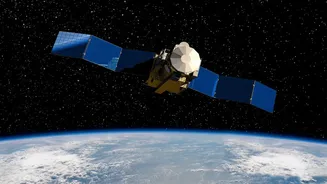
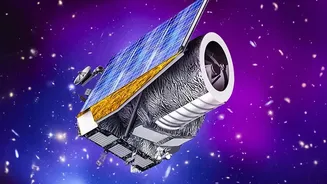
NASA has given the green light for the development of PRIMA, a cutting-edge space telescope set to tackle some of the biggest questions in astrophysics. This mission is the first to be selected for a new category called Probe Explorers, which are designed
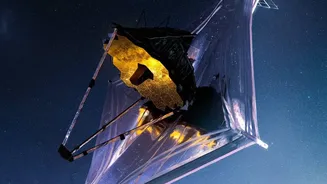
to be more ambitious than smaller projects but more cost-effective than flagship observatories like the James Webb Space Telescope (JWST). Recommended by the National Academies, this new class of missions aims to ensure a steady stream of powerful scientific tools exploring the heavens. With a projected cost of around $1.2 billion, PRIMA is targeted for launch no earlier than 2033 for a five-year mission to survey the cold universe.
The All-Important Far-Infrared Gap
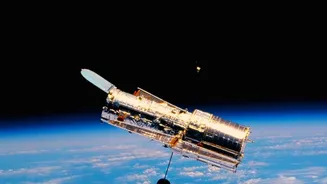
So why is PRIMA so important? It’s designed to see a specific type of light that has remained largely invisible to our most powerful telescopes. Think of the electromagnetic spectrum as a cosmic piano. Telescopes like Hubble see in visible light, while the JWST excels in near- and mid-infrared. Ground-based observatories like the ALMA array in Chile capture long-wavelength radio waves. But in between the wavelengths seen by Webb and ALMA lies the "far-infrared gap." This region of light is blocked by Earth's atmosphere, meaning we have to go to space to see it clearly. By peering into this gap, PRIMA will capture signals from very cold objects in the universe—things that don't shine brightly in other forms of light.
A New Window on Cosmic Origins
Observing in the far-infrared will allow astronomers to witness processes that are currently shrouded in mystery. One of PRIMA's primary goals is to trace the journey of water through protoplanetary disks, the massive clouds of gas and dust where new planets are born. This could finally help us understand how Earth and other potentially habitable worlds get their water. The mission will also investigate the dawn of galaxies, studying how they and their central supermassive black holes grew over cosmic time. Furthermore, by tracking the glow of cosmic dust, PRIMA will map how heavy elements, the building blocks of planets and people, were created and distributed throughout the universe. Essentially, it will help connect the dots from the early cosmos to the universe we see today.
A Powerful Partner to Webb and Roman
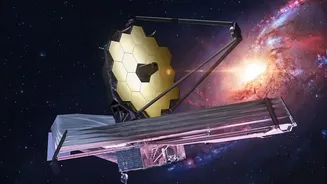
PRIMA is not a replacement for the James Webb or Nancy Grace Roman space telescopes, but a crucial collaborator. While Webb provides incredibly detailed, deep views of small patches of the sky, PRIMA will conduct wide-field surveys, mapping large areas to give scientists the bigger picture. It will be orders of magnitude more sensitive than previous far-infrared missions like the Herschel and Spitzer space telescopes, offering unprecedented sharpness. This complementary approach is vital; Webb can study the hot inner regions of a planet-forming disk, ALMA can see the cold outer edges, and PRIMA will survey the critical middle zone where much of the planet-forming action happens. As Nicky Fox, associate administrator for NASA's Science Mission Directorate, put it, PRIMA is "humanity's next window into the deep universe."