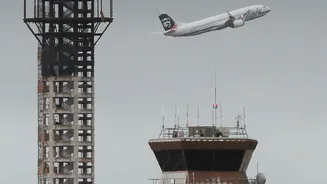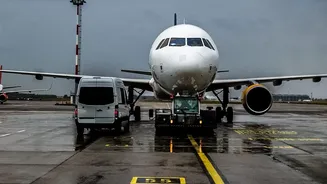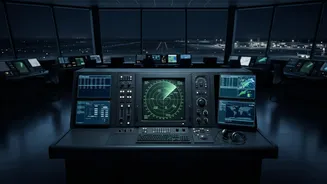







The scene at airports across the United States was one of controlled chaos. Thousands of flights were grounded, stranding countless passengers and throwing travel plans into disarray. The cause was not weather or a security threat, but something much
smaller: a network router.
A Nation's Flights on Hold
On Friday, November 13, 2026, the US Federal Aviation Administration (FAA) took the rare and drastic step of issuing a nationwide ground stop, halting all departing flights for more than four hours. The order, the longest of its kind since the 9/11 attacks, was issued out of an abundance of caution after air traffic control systems began showing signs of instability. While planes already in the air were able to land safely, the shutdown resulted in the cancellation of nearly 20,000 flights and delays for thousands more, with the disruption extending through the weekend as airlines scrambled to recover. The fallout was felt globally, with international flights from Europe and Asia also facing cancellations and delays.
The Suspect: A Single Point of Failure
Investigators quickly zeroed in on a surprising culprit: a newly installed network router at a remote FAA facility in El Dorado, Arkansas. The router was part of a major, ongoing project by contractor L3Harris to upgrade the FAA's aging telecommunications network from copper wiring to modern fiber-optic lines. According to the FAA and Transportation Secretary Sean Duffy, the new device began sending an overwhelming amount of data across the network—reportedly 1,000 connection attempts every four to five seconds—shortly after it was installed. This data flood destabilized communications and radar feeds at 17 of the nation's 22 regional air traffic control centers, prompting the shutdown. While the investigation is ongoing to find the root cause of the router's malfunction, officials have paused further installations as a precaution. There has been no indication that the event was caused by a cyberattack.
A Cascade of Systemic Risk
The incident serves as a stark illustration of a 'single point of failure' (SPOF)—a component in a system that, if it fails, can bring the entire system down. In this case, the legacy equipment still in use across much of the FAA's network could not handle the data surge generated by the new router. The overload cascaded from one regional hub to the next as automated backup protocols tried, and failed, to shift the traffic onto other circuits that were also running on older hardware. This domino effect highlights the immense risk embedded in critical infrastructure that mixes new and decades-old technology. While some newer, fully digital parts of the system worked normally, the older components failed under the unexpected strain, leading to the nationwide paralysis.
The Push for Modernization
The disruption has reignited a long-standing debate about the urgent need to modernize the US air traffic control system. Officials have noted for years that much of the underlying infrastructure is dangerously outdated. A 2024 government review found that 51 of 138 FAA air traffic systems were 'unsustainable'. Following the ground stop, Transportation Secretary Duffy renewed calls for Congress to provide emergency funding, requesting as much as $50 billion to complete the vital upgrades from legacy systems to modern, resilient digital infrastructure. However, the process is not just about money; experts point to the need for skilled personnel and effective management to see the complex project through without further delays. For now, the FAA is relying on older, 25-year-old routers to maintain network stability while the new, malfunctioning ones are tested in a lab.