






An Unprecedented Digital Boom
India is on the verge of a data-centre revolution. According to a July 2026 report by global consultancy firm Wood Mackenzie, the nation's operational data-centre capacity is projected to skyrocket from an estimated 2.2 gigawatts (GW) in 2025 to a staggering
12 GW by 2030. This represents a compound annual growth rate of nearly 40%. To put this in perspective, this expansion is equivalent to adding the power capacity of several nuclear power plants just to run servers and digital infrastructure. This surge reflects a structural shift in the market, positioning India as one of the most attractive destinations for digital infrastructure investment in the Asia-Pacific region. The question for global and domestic investors is no longer if they should build in India, but where and how quickly they can do it.
The AI Fueling the Fire
The primary catalyst for this explosive growth is Artificial Intelligence. Unlike standard computing tasks like sending emails or streaming videos, AI workloads—especially training large language models—are incredibly power-intensive. The complex calculations required by AI demand high-density racks of specialised processors (GPUs) that consume enormous amounts of electricity and generate immense heat. The Wood Mackenzie report highlights that AI-dedicated capacity alone is expected to leap from just 275 megawatts (MW) in 2025 to over 6,500 MW, or 6.5 GW, by 2030. This means that by the end of the decade, more than half of India's entire data-centre capacity could be dedicated to powering AI, transforming the very nature of the country's digital infrastructure.
Heavyweights Place Their Bets
This forecast is backed by a flood of investment from some of the biggest names in technology and infrastructure. Global hyperscalers like Amazon Web Services, Google, and Microsoft are pouring billions of dollars into expanding their cloud regions in India. Simultaneously, domestic giants are making massive commitments. Companies like AdaniConnex and Yotta Infrastructure, backed by the Adani and Hiranandani groups respectively, are developing massive hyperscale campuses. This is complemented by established players such as CtrlS, Nxtra Data, and STT GDC India, who are all expanding their footprint. This investment isn't just about building digital warehouses; it's a strategic play on India's booming digital economy, which boasts over a billion internet users and processes tens of billions of UPI transactions monthly.
The Race to Build New Hubs
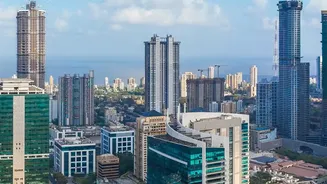
Historically, India's data-centre capacity has been heavily concentrated in Mumbai and Chennai, cities that offer direct access to crucial international submarine fibre optic cables. These two cities currently account for about 65% of the country's installed IT load. However, the sheer scale of the required expansion, coupled with land and power constraints in these metros, is forcing a geographic diversification. States like Gujarat, Uttar Pradesh, Telangana, and Andhra Pradesh are aggressively courting investors with new data-centre policies, offering incentives on land, power, and taxes. Uttar Pradesh aims to attract over ₹2 lakh crore in investment, while Gujarat recently launched a policy targeting 7.5 GW of capacity, indicating a fierce competition among states to become the next major data hub.
Power and Water: The New Bottlenecks
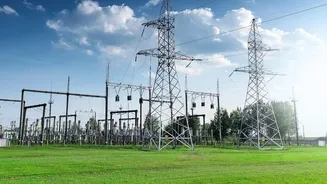
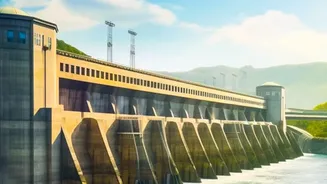
While capital flows in, the industry's growth is facing two critical physical constraints: reliable power and sufficient water. According to experts, access to cost-competitive electricity has overtaken land availability as the primary challenge for developers. The projected data-centre boom could see the sector consume as much as 7% of India's total electricity demand by 2040, putting significant pressure on the grid. Furthermore, the high-density servers required for AI need constant cooling, a process that is incredibly water-intensive. In a country already facing water stress in many regions, the demand for water for cooling towers is becoming a serious investment risk and a key factor in site selection, particularly in hubs like Chennai and Bengaluru.