




More Than Just a Seasoning
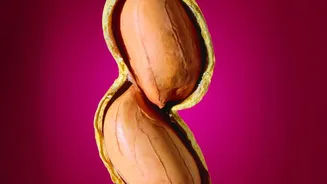
When you see street vendors in India expertly tossing peanuts in a large wok filled with hot salt, it’s a masterful display of a time-honoured cooking method. The first thing to understand is that the goal isn't to make the peanuts excessively salty.
In fact, when done correctly, the peanuts absorb very little sodium. The salt here isn’t primarily a flavouring agent; it’s a cooking medium. By using a large quantity of heated salt, cooks create a unique environment that roasts the peanuts more effectively than the hot air of a conventional oven. The salt completely envelops each peanut, transferring heat from all directions simultaneously.
The Science of Even Heat
The magic of salt-roasting lies in its ability to provide incredibly consistent and gentle heat. Salt has a high specific heat capacity and excellent thermal conductivity when used as a granular medium. Think of it like a hot bath versus a sauna. In a sauna (like an oven), the hot air cooks the surface of your food quickly, which can lead to scorching on the outside before the inside is fully cooked. In a hot bath (like the salt bed), the liquid surrounds the object, transferring heat evenly to every part of it. Hot salt granules function in a similar way, acting as a fluid-like medium. They fill every nook and cranny around the peanuts, ensuring there are no 'hot spots' or cooler patches that you'd get from a baking sheet where the nut only touches the pan in a few places. This results in a deep, even roast from the inside out.
Why It’s Better Than Air-Roasting
Standard dry roasting in an oven often leads to uneven results. Peanuts can easily burn where they make contact with the hot metal of the baking tray, while other parts remain undercooked. This uneven cooking can develop bitter flavours. Salt-roasting completely avoids this problem. The bed of salt acts as a thermal buffer, preventing direct, harsh heat from scorching the peanuts. Furthermore, the salt helps to draw out moisture from the peanuts more gradually and uniformly. This process is crucial for developing the deep, nutty flavour and that signature brittle crunch. The result is a peanut that is consistently golden-brown, perfectly crisp, and free from the burnt or raw spots common in other methods.
The Perfect Texture and Flavor
The outcome of this gentle, even heating is a superior peanut. The slow and steady removal of moisture transforms the internal structure, leading to an exceptionally crunchy texture that lasts. Flavour development is also enhanced. Roasting is a chemical process known as the Maillard reaction, where heat causes amino acids and sugars to react, creating the complex, savory flavours we associate with roasted foods. Because salt-roasting cooks so evenly, it allows this reaction to occur perfectly throughout the entire peanut, yielding a richer and more nuanced nutty taste without any bitterness from scorching. While the peanuts are roasted in salt, they don't become overwhelmingly salty; the shells provide a barrier, and the process imparts just a hint of savoury flavour.
A Versatile and Ancient Technique
This method is far from being a modern culinary invention; it's an ancient technique used across the world for various foods. In addition to peanuts, everything from potatoes and other root vegetables to fish and chicken can be roasted by being encased in a salt crust. In all these applications, the principle remains the same: the salt seals in moisture and flavour while providing a perfectly even cooking temperature that other methods struggle to replicate. The salt itself can even be reused for future roasting sessions, making it a surprisingly sustainable kitchen staple.