







A Multi-Billion Dollar Capital Raise
On Tuesday, Amazon finalized an eight-part bond sale designed to raise at least $25 billion. The move is explicitly aimed at funding the company's colossal investments in AI infrastructure. While an Amazon spokesperson stated the funds are for general
corporate purposes, including capital expenditures and repaying debt, the context is clear: this is war chest money for the AI arms race. This sale is part of an aggressive borrowing strategy that has seen the company raise over $100 billion in the last year alone. In fact, Amazon has already raised approximately $54 billion through other bond sales in 2026. This latest offering, which saw strong investor demand peaking at $62 billion, will fuel Amazon's projected $200 billion capital expenditure budget for this year.
The Real Cost of an AI Brain
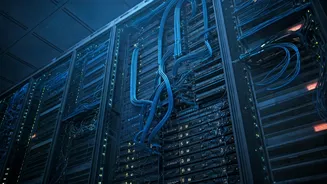
So, why does a company with the scale of Amazon need to borrow such vast sums? The answer lies in the astronomical cost of building and running the infrastructure that powers modern AI. This isn't just about software; it's a game of physical assets. The primary expenses are specialized data centers and the thousands of powerful chips, or GPUs, inside them. Building a single AI-optimized data center can cost $20 million or more per megawatt of power capacity, with large-scale projects easily exceeding $1 billion. The hardware inside is even more expensive. A single high-end Nvidia H100 GPU, the current gold standard for AI training, can cost between $25,000 and $40,000. When a single data center requires thousands of these chips, the costs multiply at a dizzying rate. This spending is for building the very foundation of AI services, from generative AI models to enterprise cloud solutions.
An Arms Race Fueled by Silicon
Amazon is not investing in a vacuum. The $25 billion bond sale is a strategic move in an escalating spending war among tech's biggest players. Collectively, Big Tech firms like Amazon, Microsoft, Alphabet (Google), and Meta are expected to spend over $700 billion on AI this year alone. Microsoft is on track to spend around $190 billion in 2026, while Alphabet has projected capital expenditures up to $185 billion. This represents a fundamental shift for Silicon Valley giants, who historically relied on their vast cash reserves for major projects. Now, the sheer scale of AI investment requires them to tap debt and equity markets regularly. Meta, for example, has also recently raised billions through bond sales to fund its own AI ambitions.
More Than Just Machines
While hardware and data centers represent the bulk of the cost, the investment doesn't stop there. A significant portion of this capital is directed towards research and development, including designing custom chips like Amazon's own Trainium and Graviton processors to reduce reliance on third-party suppliers like Nvidia. There's also the immense cost of talent, as companies compete to hire the world's top AI researchers and engineers. Furthermore, the energy required to power these massive AI factories is a growing operational expense that cannot be ignored. These sprawling data centers consume vast amounts of electricity for both computation and cooling. As Amazon CEO Andy Jassy described it, this is a “once-in-a-lifetime opportunity” that justifies the unprecedented scale of spending.